

An elusive creature that is mostly nocturnal, the fisher is known as a highly successful land predator, but they are also very comfortable in trees and travelling amongst the canopies.
The fisher lives in boreal forests across North America. In Canada, particularly in Alberta, the fisher population is estimated to be healthy and abundant. In Washington state, over-trapping and habitat loss had pushed fishers out by the early to mid-1900s. By the 1990s, the species was formally declared extirpated.
Fishers rely on dense forest habitats with large trees, strong canopy cover, and coarse wooden debris for making dens to raise their young. Female fishers prefer mature trees with cavities as their denning sites.
Fishers live across Canada’s boreal forest regions, from British Columbia to eastern Canada. The Wilder Institute’s conservation efforts focus on restoring the fisher populations in Washington state.
Over-trapping, forest fragmentation, and the loss of dense forest habitats.
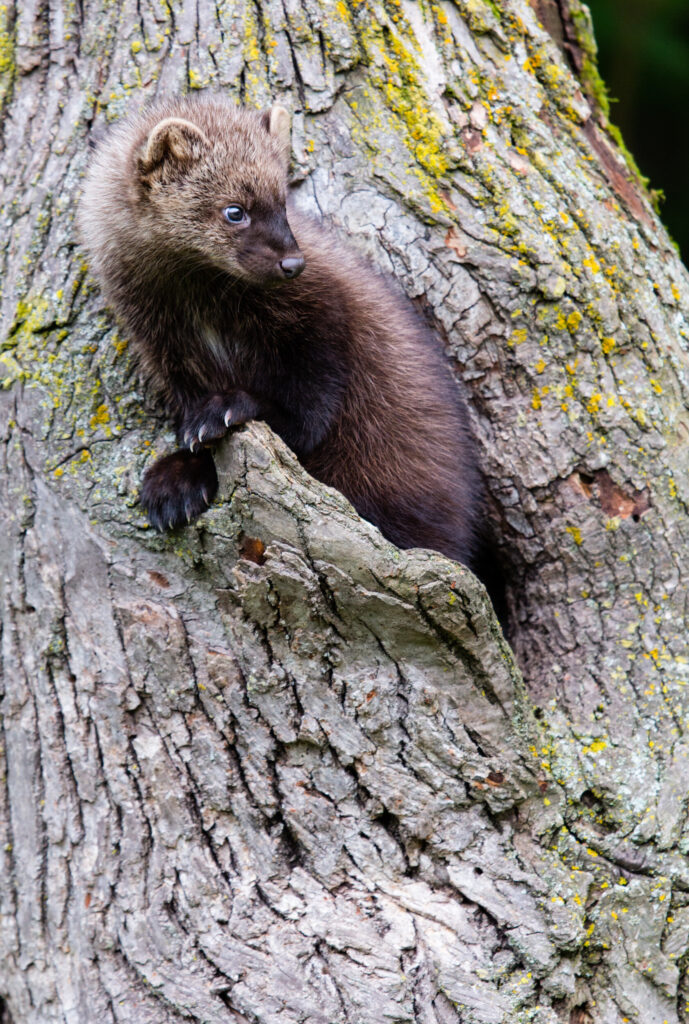
The fisher is a tree-climbing member of the weasel family found in North American forests. Agile and adaptable, fishers play an important role as mid-sized predators in forest ecosystems.
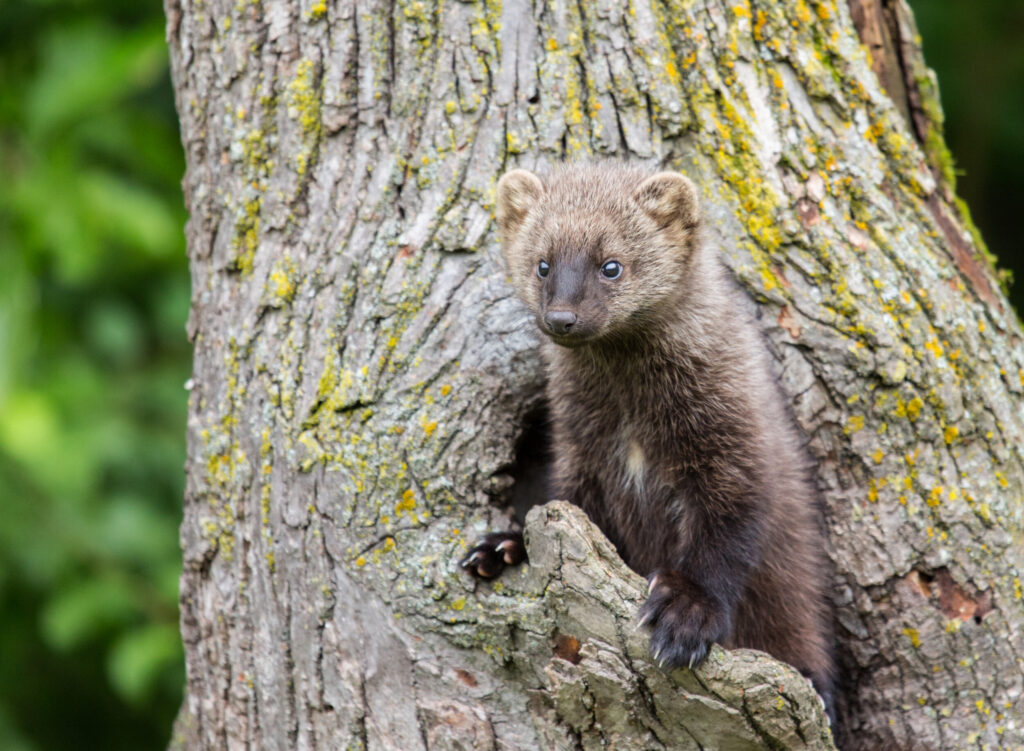
The fisher is the second-largest member of the weasel family in North America after the wolverine. They are mostly nocturnal and are highly skilled hunters, able to prey upon birds, rodents, and porcupines while travelling through dense forests and tree canopies.
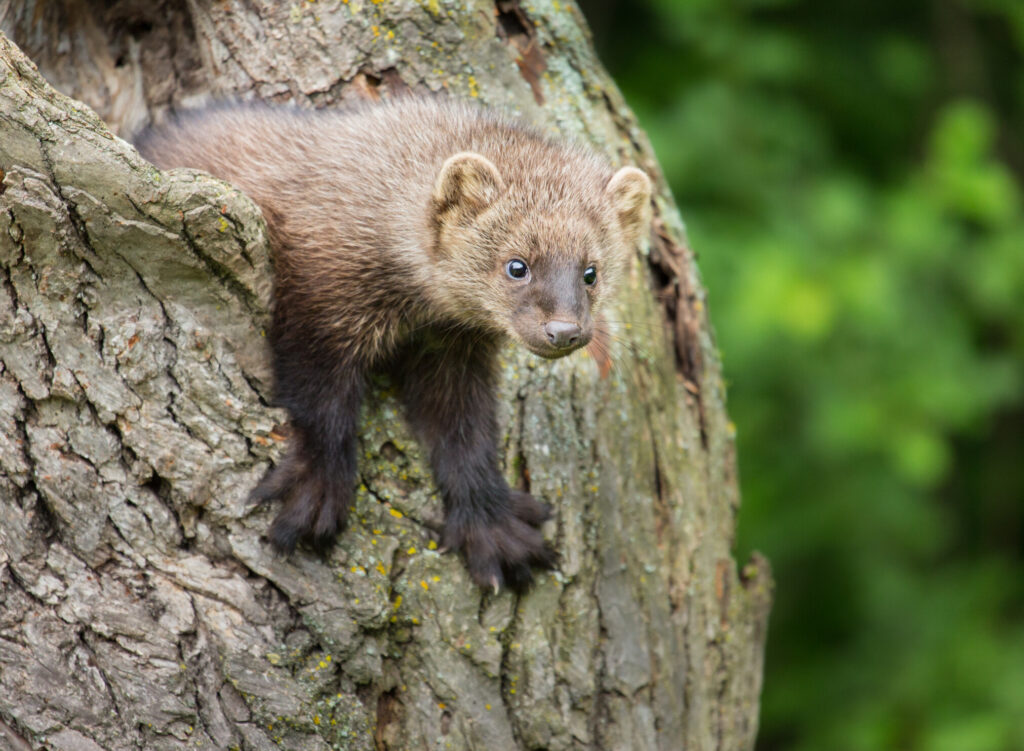
Fishers inhabit boreal and mixed forests across Canada and parts of the United States. They rely on connected forests with mature trees and enough canopy cover and woody debris to use for raising their young.
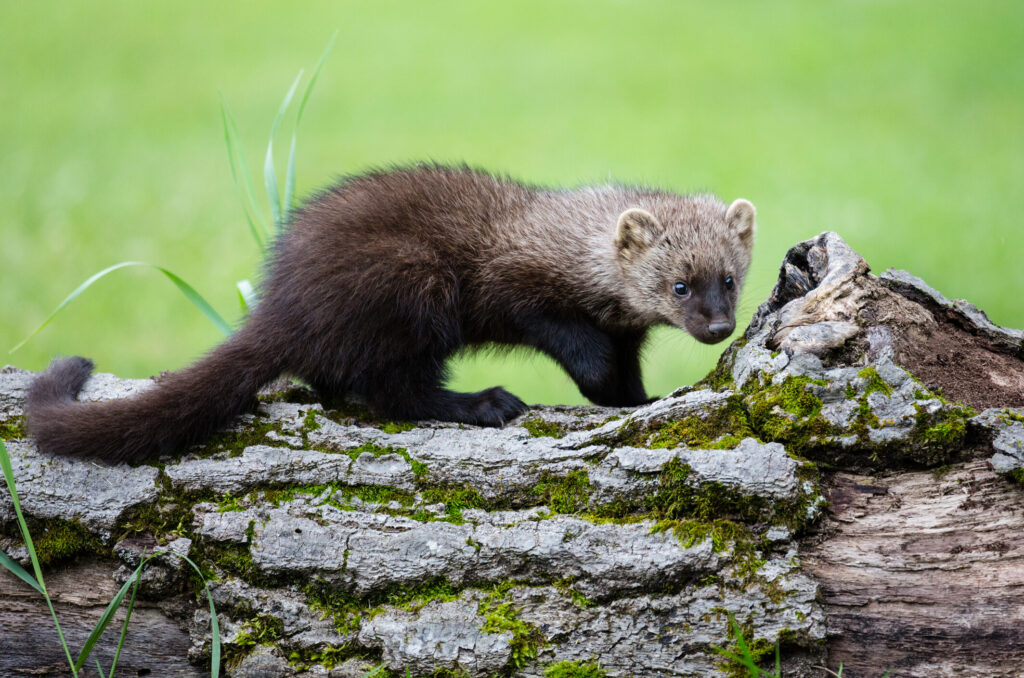
Fishers have long, slender bodies, bushy tails, rounded ears, and compact legs that help them move quietly through forests. They’re exceptional climbers and can rotate their hind feet nearly 180 degrees, allowing them to descend trees headfirst while hunting or travelling.
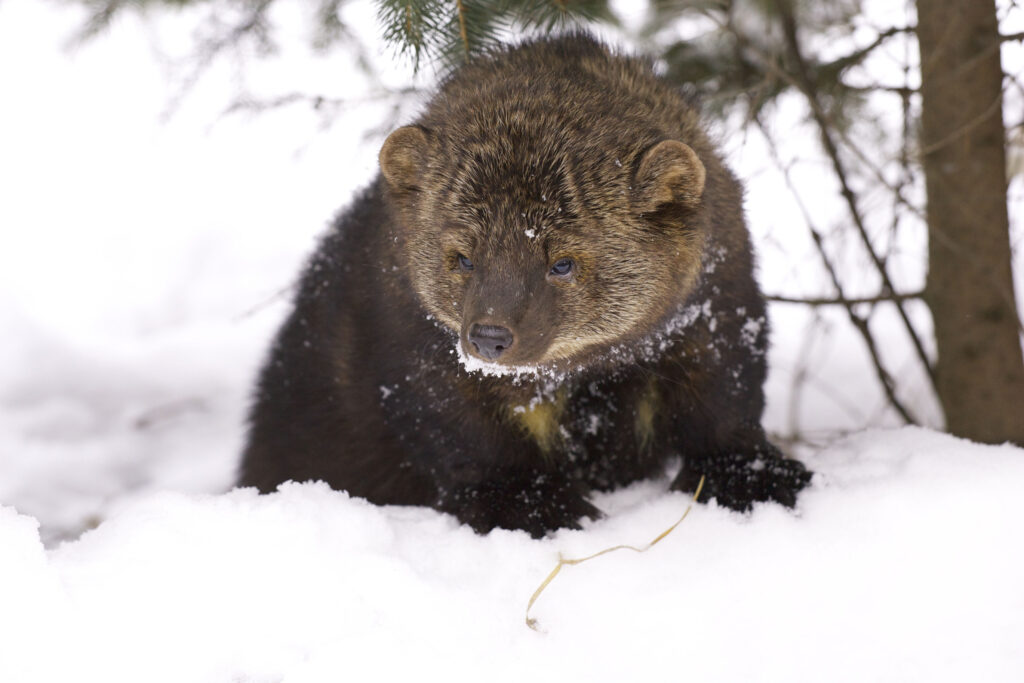
The fisher is not named after its ability to catch fish, but its name is derived from the word “fiche” a European word for a similar species, the polecat. Fishers are equally comfortable on the ground and in trees, able to hunt prey across the forests they call home.
As skilled hunters, fishers regulate prey populations in forest ecosystems, contributing to healthy biodiversity. Because they rely on connected, mature forests, protecting fishers also protects critical habitat for many other species and supports more resilient landscapes.
Fishers face pressure from habitat loss, forest fragmentation and wildfire. Excessive trapping in the United States completely eliminated the species from areas where they were once abundant. Expanding human development and activity further isolates their populations, making it more difficult for fishers to safely travel and reproduce.
The Wilder Institute worked with partners to support fisher reintroduction in Washington state. Fishers captured in Alberta were taken to the Wilder Institute where they received health assessments, tracking transmitters, and behavioural monitoring before release. This helped researchers better understand their movement, survival, and reproduction in the wild.
Researchers collect data on fishers’ health and behaviour to better understand which factors contribute to successful reintroduction and long-term population recovery.
Since 2008, our partners have been working to reintroduce the fisher in the Cascade Mountain Range and Olympic Peninsula in Washington. Fishers from Alberta are translocated to help restore the species where it disappeared due to over-trapping and habitat loss.
The reintroduction of fishers to Washington will help fill a niche that has been empty for decades while restoring balance to the ecosystem. Protecting these connected forests is critical to supporting their populations and maintaining ecological balance across these areas.
The Wilder Institute collaborates with trappers, researchers, veterinarians, parks agencies, and conservation organizations to support ongoing fisher population recovery.
Protecting ecosystems through collaborative wildlife conservation.
The Wilder Institute worked with partners to capture, and translocate fishers from Alberta to Washington. While fishers were in our care, the veterinary team conducted health exams and fitted them with transmitters, and researchers collected physical and behavioural data to understand how individual characteristics impacted post-release survival.
Fishers were humanely captured by local trappers in Alberta and transported to the Wilder Institute for health assessments and preparation before translocation. Release sites were located in the fisher’s historic range: the Cascade Mountain Range in Washington state.
Fishers inhabit forests across much of Canada and parts of the northern United States.
Help protect forests and support wildlife recovery efforts.
Support conservation programs that restore fisher populations and protect connected forest habitats.
Join a community helping conserve wildlife and strengthen healthy forest ecosystems across North America.
Discover monthly giving and fundraising opportunities that support conservation and species recovery initiatives.