

The Vancouver Island marmot is Canada’s most endangered mammal – and one of only five endemic mammals in the country. While we may never fully know what drove the species to near extinction, it is predicted that land-use changes disrupted dispersal and exacerbated predation pressure. Intensive, evidence-based conservation has helped recovery begin; however, the wild population remains vulnerable to stochastic events, predation, and environmental change due to its small size

Since 1998, the Wilder Institute has worked with members of the Vancouver Island Marmot Recovery Team (now operating as the Recovery Implementation Group) and other partners to facilitate conservation breeding for reintroduction and applied research toward recovery. We maintain one of three conservation breeding facilities in Canada, contribute individuals for wild release, and conduct research to close knowledge gaps that shape recovery strategies.
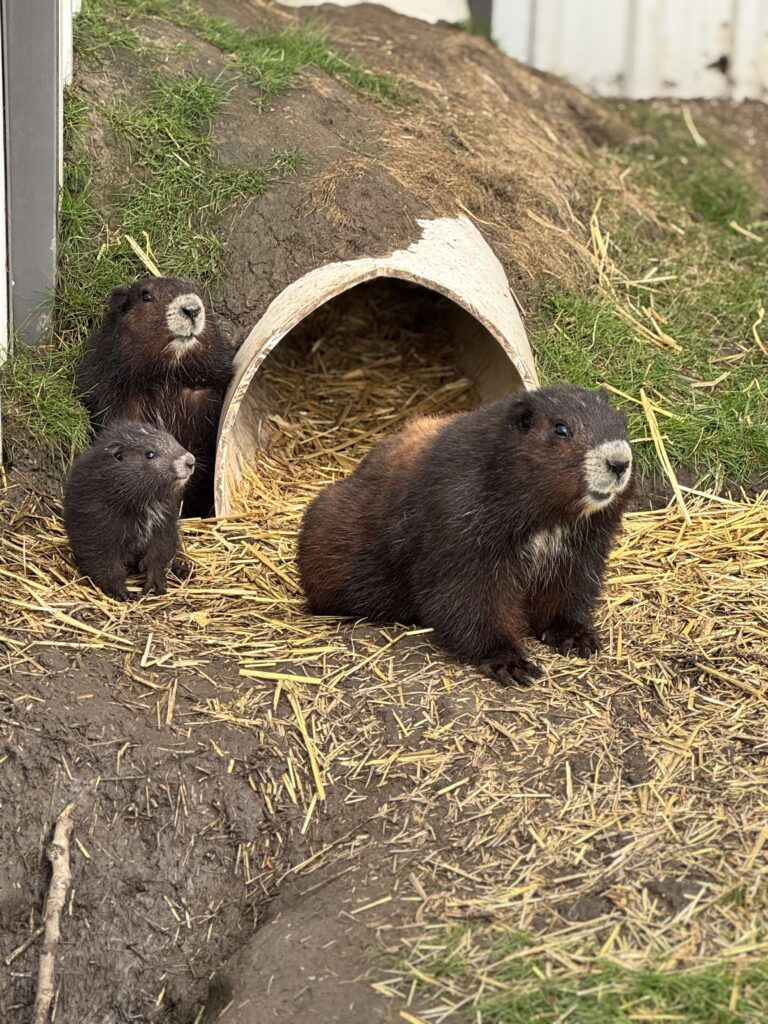
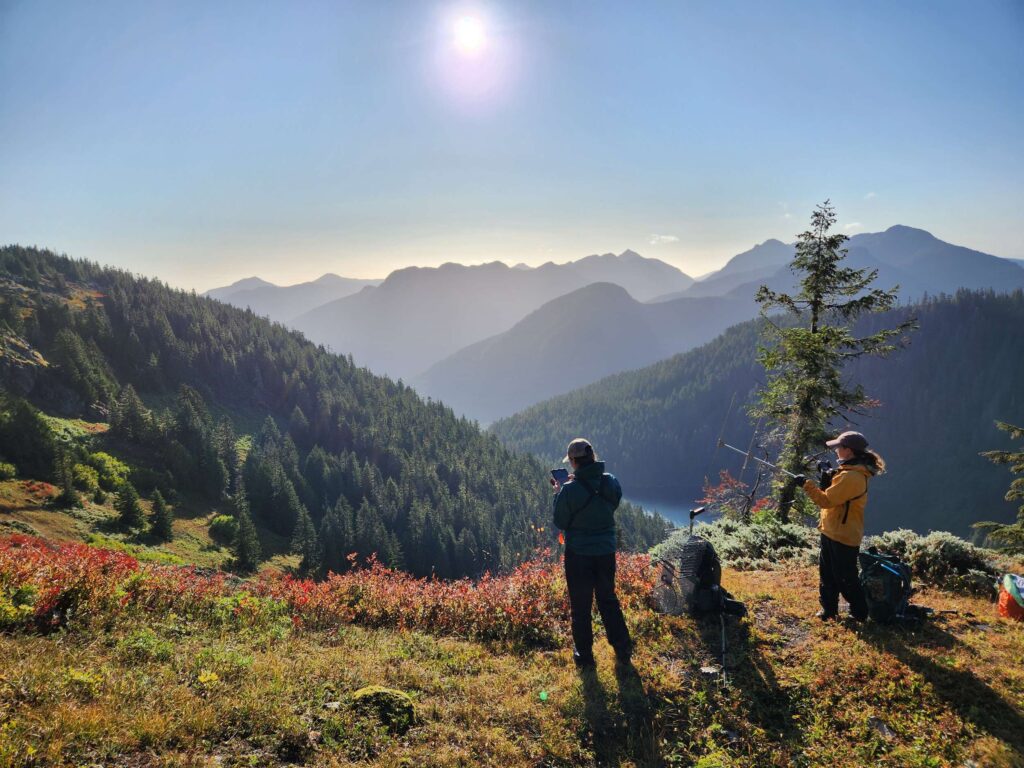
Conservation breeding takes place across Canada with Toronto Zoo and Marmot Recovery Foundation. Our conservation breeding programs occur at the Wilder Institute’s Archibald Biodiversity Centre – this facility gives Vancouver Island marmots the space to dig, explore, and raise pups underground, much like they would do in the wild. Field research extends to Vancouver Island’s remote sub-alpine and alpine terrain, where field crews hike into the small, connected colonies that have been reestablished in the species’ historic range.
The long-term recovery goal is to establish at least two self-sustaining metapopulations within the marmot’s historic range, each with more than 90% probability of persisting over 100 years without human supplementation. Getting there requires maintaining genetic diversity, improving survival of released animals, reducing predation, and continuing to refine the methods that make recovery in remote mountain terrain possible.

Vancouver Island marmot populations declined rapidly beginning in the late 1980s, reaching approximately 30 individuals in the wild by 2003. It is predicted that logging, road construction, and hydro development disrupted movement between colonies and increased predation pressure – likely driving the population decline. Currently, this species faces many challenges that make its recovery uniquely difficult; small, isolated populations; naturally low reproductive output; patchy, specialized habitat, and increasing climate uncertainty.
This species is found only on Vancouver Island, British Columbia. Canada holds 100% of the global population, making its survival a Canadian conservation priority shared across communities and conservation partners.
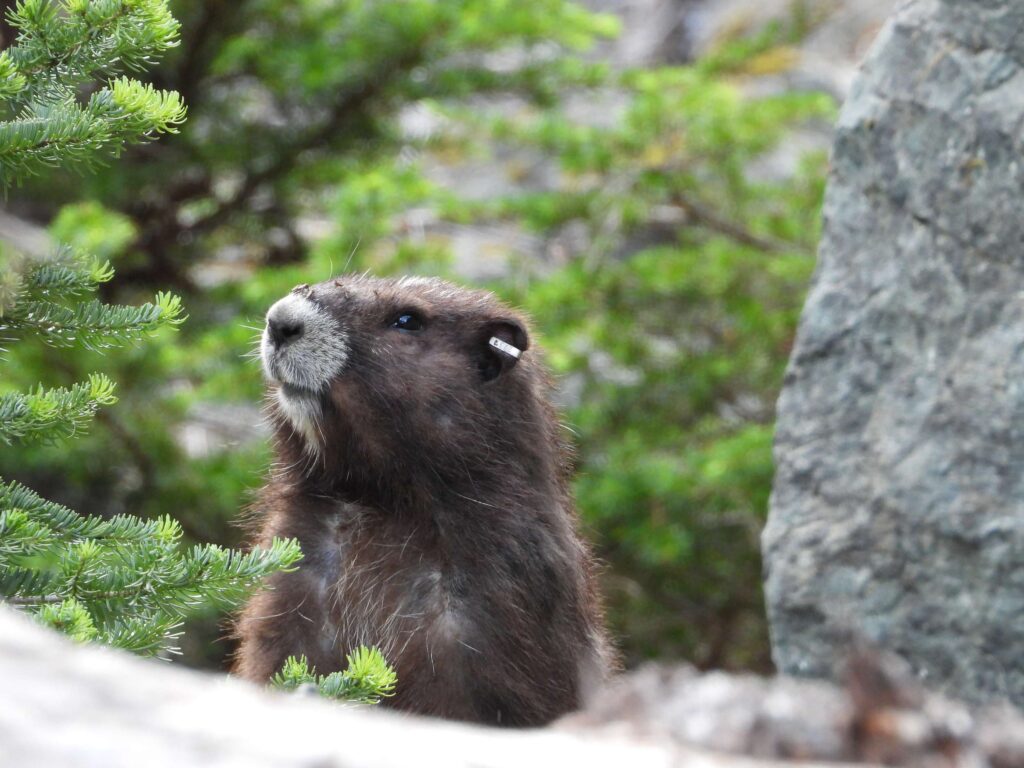
Vancouver Island marmots live in alpine and subalpine meadows on mountainous terrain. They rely open meadow habitat maintained by avalanche cycles, with native vegetation for feeding and burrows or rock piles for escape from predators. Deeper burrows called hibernacula, dug below the frost line, are used for hibernation.
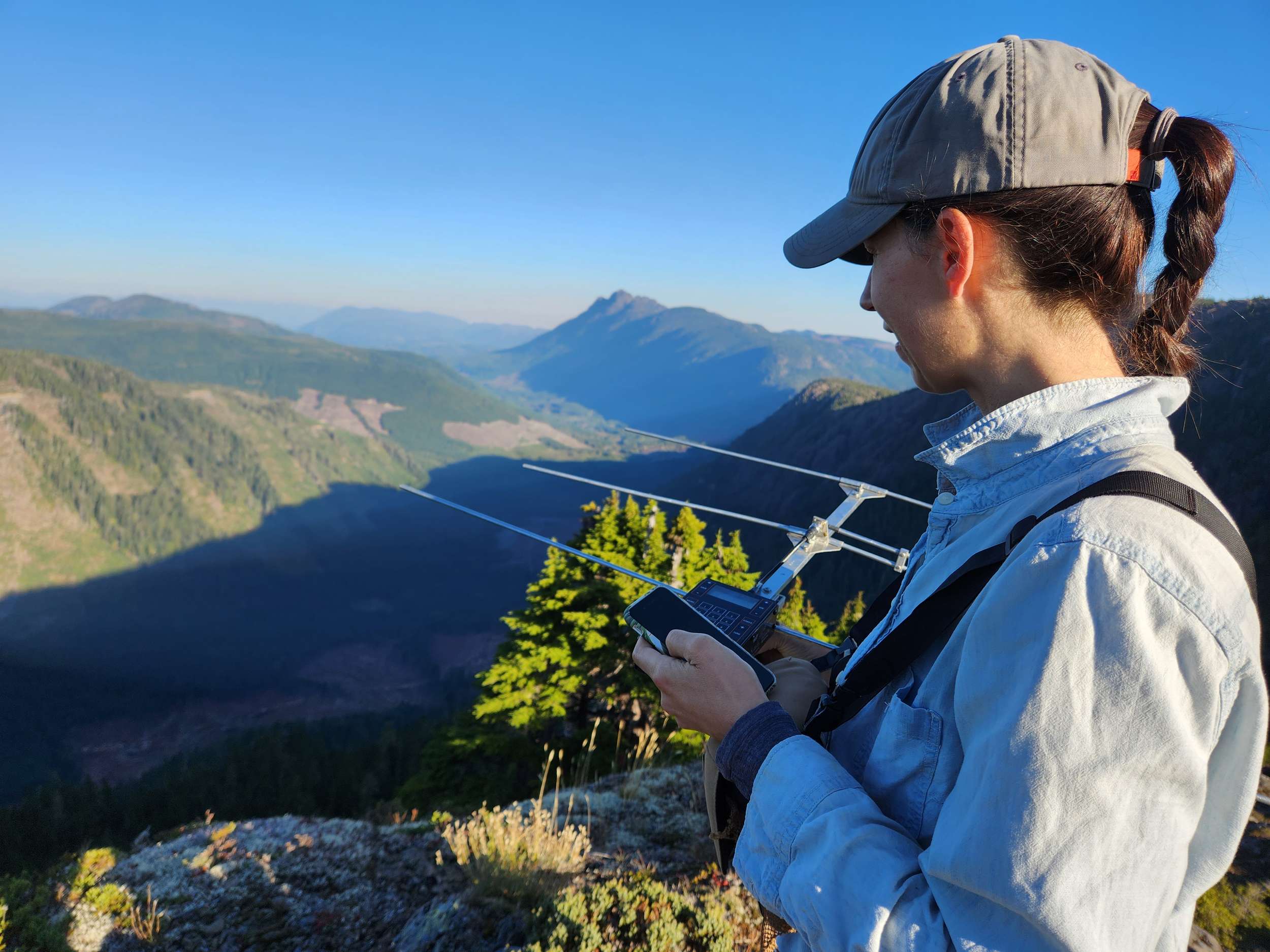
Our team contributes with our partners and collaborators across three areas: conservation breeding, development of technology to advance monitoring efforts and applied research across the conservation breeding program and in the wild. From veterinarians and geneticists to field researchers and university students, every person involved brings the Vancouver Island marmot one step closer to a self-sustaining future.
In 2003, only approximately 30 Vancouver Island marmots existed in the wild spread across five mountains. Today, the estimated wild population stands at over 425 with 37 active colonies as of 2025.. – a testament to what sustained, collaborative conservation efforts can achieve. The work is far from finished, but the trajectory has changed.
>900
Total number of marmots born from the conservation-breeding program across all organizations, includes over 250 born at the Wilder Institute
725
Number of conservation-bred individuals released into the wild since 2003 by our partner, Marmot Recovery Foundation
35
The number of Vancouver Island marmot colonies has grown from 3-4 in 2003 to over 35 today
Recovering a species as specialized as the Vancouver Island marmot requires care at every stage, from breeding pair selection to release strategies to field monitoring in challenging terrain. Every decision is guided by data, and every method is continuously refined.
We maintain a carefully managed conservation breeding program at the Wilder Institute’s Archibald Biodiversity Centre. We select breeding pairs based on genetics to preserve diversity and reduce inbreeding, and marmots born here will either be released into the wild by our partners at Marmot Recovery Foundation or become part of the conservation breeding population at our facility, the Toronto Zoo, or Marmot Recovery Foundations ‘ Tony Barrett Mount Washington Marmot Recovery Centre.
As the wild population continues to expand, it is becoming increasingly difficult to collect data on population numbers, growth, and health across the remote, hard-to-access alpine terrain. To overcome these challenges, we work to develop and deploy innovative field monitoring methods. In collaboration with our engineering partners, we have built and field-tested remote weigh scales that enable non-invasive monitoring of body condition across the active season. We are continuing to develop additional passive monitoring tools, including AI-assisted camera trap image processing and purpose-built passive integrated transponder (PIT-tag) readers, to scale up data collection capacity across the species’ range.
Our research spans the full arc of the marmot’s life in the program – from the conservation breeding facility to the wild. In the conservation-breeding program, we study factors that influence reproduction, health, and survival. We also conduct research in the wild – collaborating with our partners to evaluate the impact of recovery efforts such as the stepping-stone release technique and supplemental feeding and working to close key knowledge gaps outlined the current Recovery Strategy. Together, this research aims to refine recovery efforts to make them as effective as possible.
The Vancouver Island marmot’s recovery is only been possible due to collaborative conservation efforts. Across government, universities, zoos, private landowners, and conservation organizations, a broad network of partners has sustained this work for over two decades – and continues to shape its future.

Learn more about how we’re building One Wild Future.
Help us continue the essential work of recovering the Vancouver Island marmot.
Your support funds the breeding, research, and field work that keeps marmot recovery on track.