671
Imperiled animal and plant species listed under SARA Schedule 1
557
SARA species with finalized federal Recovery Strategies and Management Plans
285
SARA species that need the Wilder Institute’s specialized expertise in conservation translations…and counting
Protecting habitat alone isn’t enough. Many species require direct, hands-on intervention to survive.
The Wilder Canada Action Plan is a comprehensive, whole-of-society approach to scaling up targeted conservation translocation action for Canada’s imperiled species – the largest coordinated approach to species recovery in Canadian history. The Wilder Canada Action Plan is our commitment to achieving national and global biodiversity goals, closing the implementation gap for species requiring targeted action.
As a charitable NGO partner, we work alongside Environment and Climate Canada, the Department of Fisheries and Oceans, Indigenous communities, and other conservation organizations under a single, coordinated framework. This ensures resources and effort are directed where they can make the greatest impact for species recovery across Canada.
Habitat protection is essential, but many species need direct intervention – such as conservation translocations, conservation breeding, and reintroduction – to recover. The Wilder Canada Action Plan ensures those needs are identified, prioritized, and met.
We empower diverse actors, including Indigenous Nations, local communities, local conservation NGO’s, grassroots groups and others to implement effective, evidence-based conservation reintroduction and translocation programs. We will accomplish this by providing financial support via the Wilder Impact Fund, offering mentorship and training, and other capacity-sharing initiatives.
The Wilder Canada Action Plan turns intention into action through three connected steps to species recovery: identifying which species need help, applying the right interventions, and scaling impact through the partnerships that make national recovery possible.
Collaboration with Indigenous Peoples, local communities, and diverse parties is central to the entire planning, implementation and evalluation process.
Supporting practitioners of conservation, communities, and agencies with the tools, training, and resources they need to undertake conservation translocations and increase the number of people actively engaged in wildlife conservation in Canada.
Actions benefit ecological communities, not just single species in isolation.
To ensure a whole-of-society approach, our work will extend across Canada, with programs from Coast-to-Coast-to-Coast.
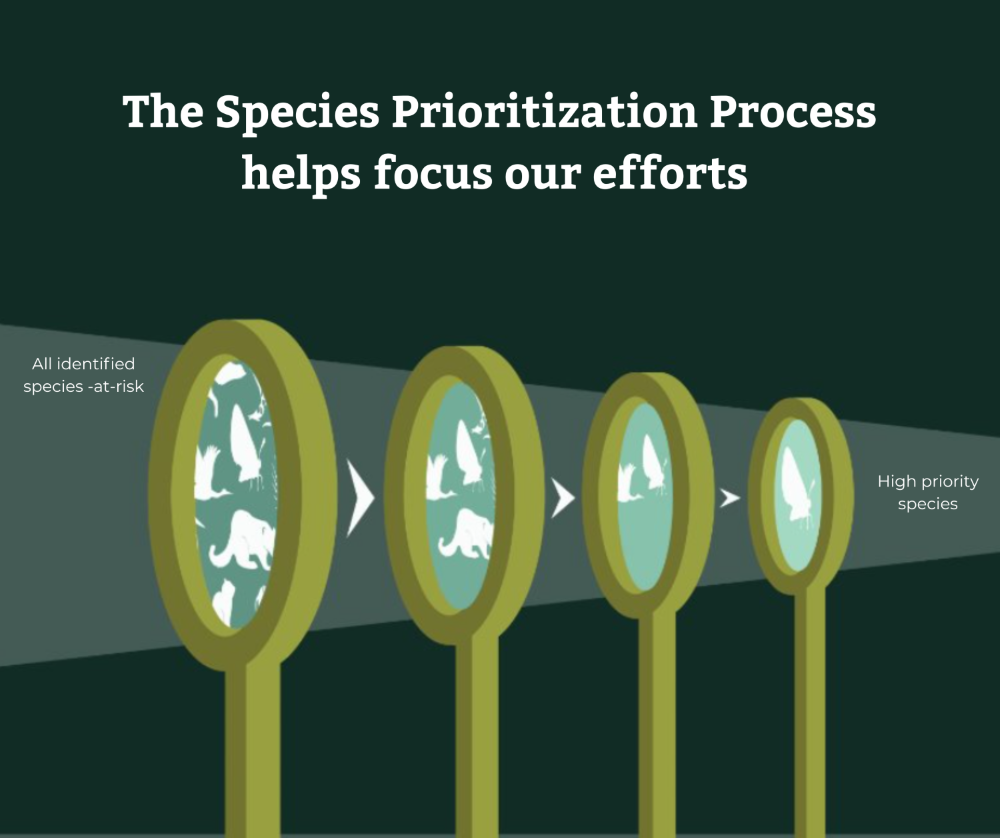
With hundreds of species in need, the Species Prioritization Process helps identify which species need action — and where we can make the biggest difference.
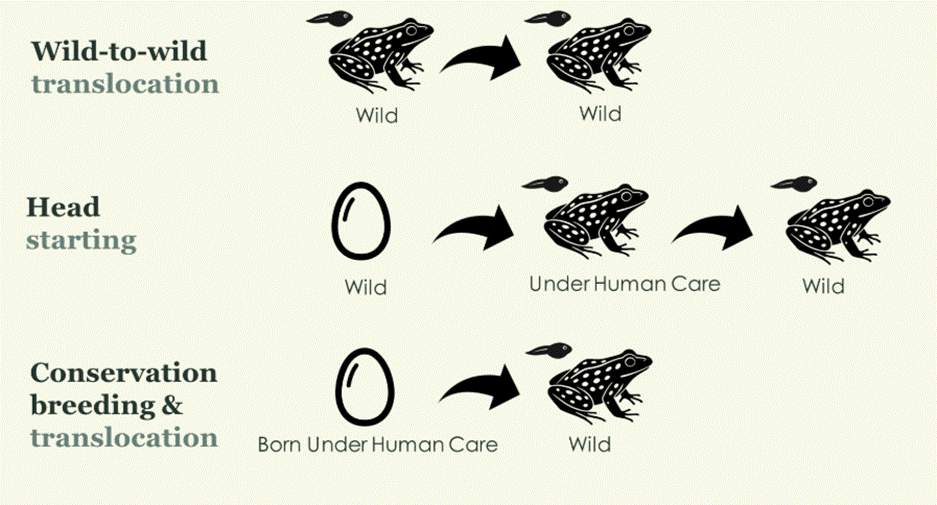
Conservation translocations are the deliberate movement of species from one site to another for conservation benefit. This is the Wilder Canada Action Plan’s primary tool, applied in three distinct ways depending on each species’ needs.
There are different types of translocations, including:
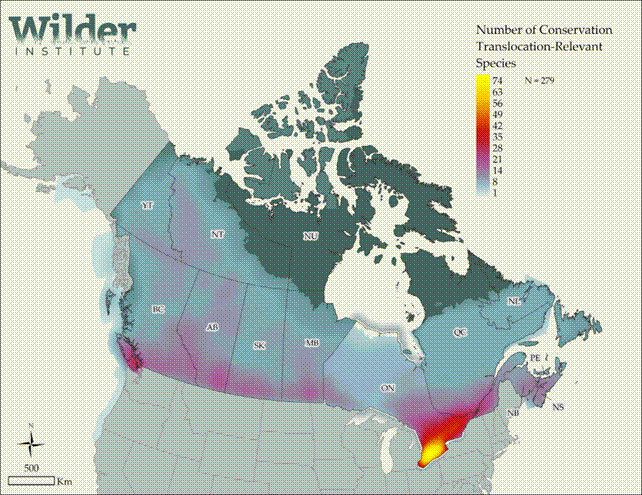
Across Canada, these regions under the Species at Risk Act carry the highest concentrations of at risk species that may benefit most from conservation translocation action.
Conservation that works for wildlife and people starts here.
Collaboration with Indigenous Peoples, local communities, and diverse parties is central to every stage of the process, from planning, implementation and evaluation of our conservation programs.
We support practitioners, communities, and agencies with the tools, training, mentorship, and knowledge transfer needed to lead conservation translocation projects across Canada.
Our conservation actions are designed to benefit entire ecosystems – not just individual species in isolation.
The Wilder Canada Action Plan is designed to create measurable, lasting results – contributing to national and global biodiversity goals to prevent further species extinctions, restore healthy ecosystems, and strengthen capacity for conservation.
Catalyzing action for a growing number of species ensures more conservation translocation-relevant species receive the hands-on intervention they require for recovery, closing the implementation gap.
Targeted conservation translocations halt the extinction of endangered species, restoring healthy wild populations and maintaining genetic diversity.
Strengthening Canadian capacity to implement conservation reintroduction and translocation programs amplifies our impact.

These programs are already bringing the Wilder Canada Action Plan to life across the country.
Early action like the Kinship Program: Wildlife, People, Place – developed in partnership with Magnetawan First Nation – and emerging partnerships with other Indigenous Nations and communities across Canada is demonstrating what this framework can achieve at scale.
Canada’s wildlife needs your support.
Add your name to the Wilder Canada Action Plan and show that Canadians are ready to lead the world in meeting recovery goals.
Your donation funds targeted conservation action, expands programs, and supports people working on the ground across Canada.
The more people who know about the Wilder Canada Action Plan, the stronger this national effort becomes.
In spring 2026, the Wilder Institute launched the Wilder Impact Fund, a multi-year grant program that will fund Canadian conservation translocation projects.
The Wilder Canada Action Plan sits within a broader national and global framework for biodiversity protection. These resources provide the essential context behind the work and outline the commitments that make it both urgent and necessary.
Support the largest coordinated approach to species recovery in the country.
Your voice helps raise awareness and inspires others to join this national effort.