

The northern leopard frog is an iconic amphibian known for its spotted pattern and importance to healthy wetlands. Once abundant across wetlands in western Canada, this striking amphibian has become a symbol of what we stand to lose.
The Rocky Mountain population of northern leopard frogs is listed as Endangered under Canada’s Species a Risk Act. Only one natural wild population remains in British Columbia, leaving the species vulnerable to habitat degradation, disease, invasive species, and climate pressures.
Northern leopard frogs depend on healthy wetlands, including marshes, ponds, floodplains, and slow-moving waterways. They require connected aquatic and terrestrial habitats for breeding, feeding, overwintering, and migration, making them especially sensitive to environmental changes and habitat loss.
Northern leopard frogs inhabit wetlands across North America, but the endangered Rocky Mountain population survives only in southeastern British Columbia. Recovery and reintroduction efforts are focused on the species’ historical range in the Kootenay region.
Habitat loss, invasive species, disease, and climate-related environmental changes threaten survival.
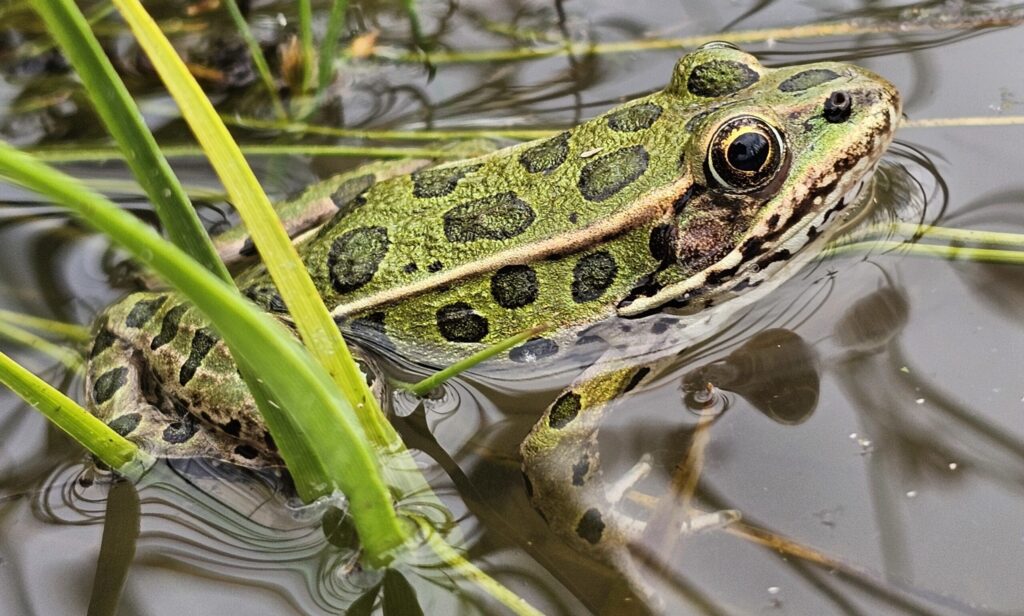
Once common across western wetlands, the northern leopard frog is now one of British Columbia’s most threatened amphibians. They are an important symbol of the urgent need to protect healthy wetland ecosystems.
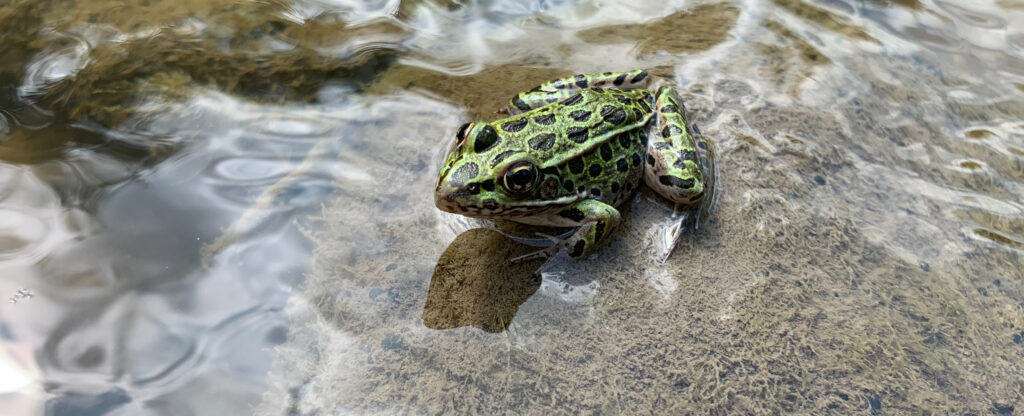
The northern leopard frog is a medium-sized amphibian recognized for its irregular dark spots and green or brown colouring. Its familiar appearance had made it one of North America’s most recognizable frogs, while its sensitive biology makes it an important environmental indicator species.
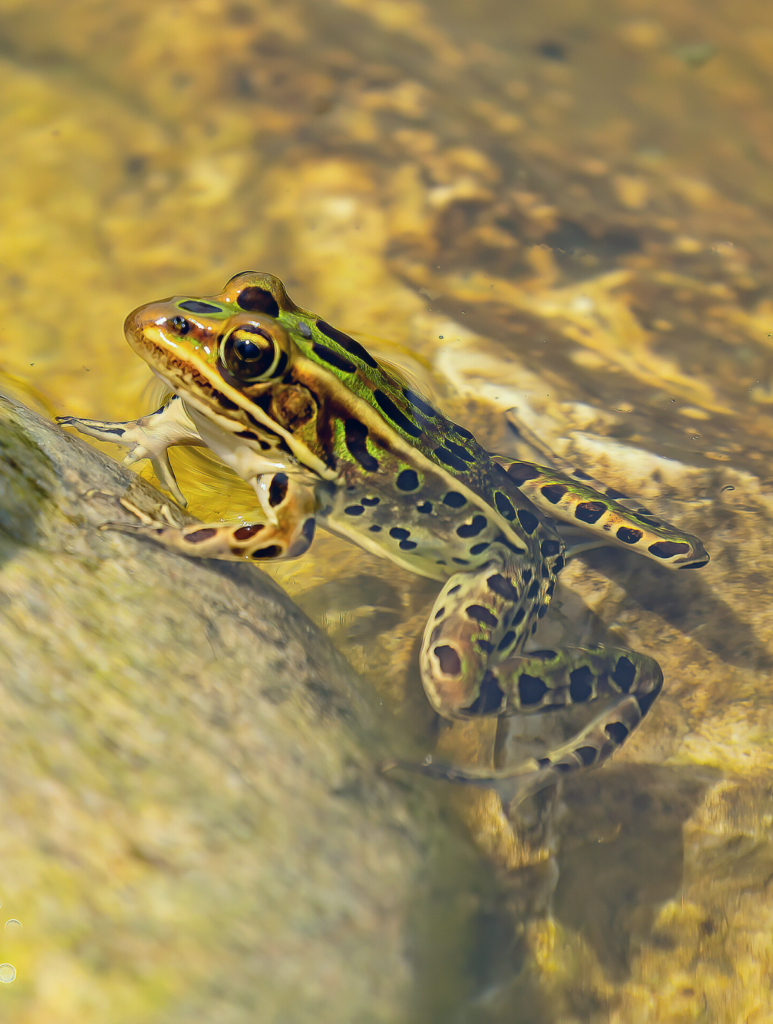
Northern leopard frogs live in wetlands connected to grasslands, ponds, marshes, and slow-moving waterways. The endangered Rocky Mountain population lives in southeastern British Columbia, where frogs rely on healthy aquatic habitats and nearby upland areas to complete different stages of their life cycle.
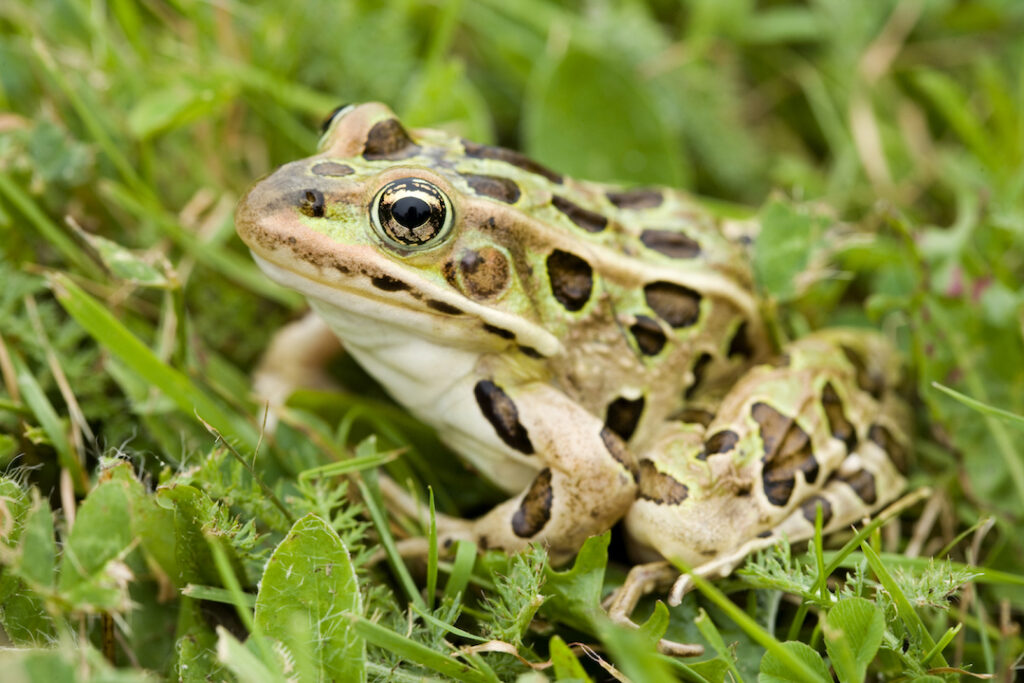
Northern leopard frogs have distinctive dark spots that help camouflage them in wetland vegetation. They are strong swimmers and are capable of travelling between connected wetland habitats. Their tadpoles have eyes positioned on the tops of their heads, unlike many frog species.
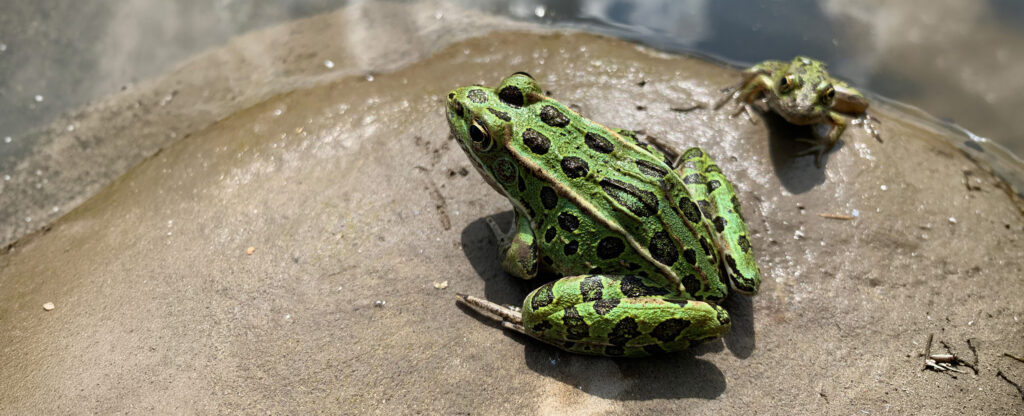
Northern leopard frogs help transfer nutrients between aquatic and terrestrial ecosystems, and are considered a key indicator of wetland health. Their sensitivity to pollution, habitat disturbance, and climate change means that their population decline often signals broader environmental problems affecting both wildlife and human communities.
Northern leopard frogs are vital players in the health of wetlands, some of the most ecologically valuable – and most rapidly disappearing – habitats in Canada. Wetlands filter our water, buffer against floods and droughts, store carbon, and provide critical shelter for wildlife. We’re losing them at an alarming rate, meaning higher risk of flooding, poorer water quality, and increased costs for communities. Losing the northern leopard frog would mean more than just one species gone. It would mean weaker wetlands, less resilient ecosystems, and fewer natural safeguards for our communities.
The Rocky Mountain population faces mounting challenges from wetland loss, habitat degradation, invasive species, disease, and climate change. Because only one natural wild population remains in British Columbia, this frog is especially vulnerable to extinction. Declining wetland health also threatens the ecological benefits that these habitats provide for wildlife and people.
The Wilder Institute leads conservation breeding, head-starting, research, and reintroduction efforts for northern leopard frogs in British Columbia. Our efforts are led by a team of specialists in amphibian ecology, genetics, and animal care, health, and welfare. Our work is strengthened through deep collaboration with Vancouver Aquarium, Edmonton Valley Zoo, B.C. Ministry of Water, Land, and Research Stewardship, Nature Conservancy of Canada, Creston Valley Wildlife Management Area, private landowners, and local communities. This network of support is vital to improving wetland resilience and strengthening long-term amphibian conservation.
The conservation breeding program increases the number of northern leopard frogs that can be reintroduced back into the wild while supporting genetic diversity and supporting genetic diversity and fertility research and encouraging natural breeding behaviours.
Conservation-bred, head-started, and translocated tadpoles are released are released into suitable wetland habitats in British Columbia to help establish additional populations and reduce reliance on a single vulnerable population.
Protecting and improving wetland habitat is essential for northern leopard frog recovery.
As part of a wider goal of improving amphibian conservation in North America, our staff are also members of the Oregon Spotted Frog and Northern Leopard Frog Captive Husbandry Group, the British Columbia Northern Leopard Frog Recovery Implementation Team, the Committee on the Status of Endangered Wildlife in Canada (COSEWIC) Amphibians & Reptiles subcommittee, and the International Union for Conservation of Nature (IUCN) Species Survival Commission Amphibian Specialist Group.
Collaborative conservation programs are helping other species like the northern leopard frog recover.
Since 2015, the Wilder Institute has been involved in northern leopard frog conservation in British Columbia through an integrated, multi-pronged approach of disease mitigation, fertility research, an assurance population under human care at the Archibald Biodiversity Centre, habitat improvements, and conservation translocations. The goal is to establish additional self-sustaining populations across interior British Columbia.
The northern leopard frog program operates across British Columbia’s wetland ecosystems. Conservation breeding takes place at the Archibald Biodiversity Centre, where the breeding population produced 6,737 tadpoles – alongside wild head-starting efforts that contributed 1,013 tadpoles in 2026. Reintroduction work is centred at Cherry Meadows, a Nature Conservancy of Canada property, and Sparrowhawk Farm, a private landowner relationship that exemplifies how farms and ranches are critical partners in finding suitable habitat for species at risk. The Wilder Institute joined the B.C. Northern Leopard Frog Recovery Implementation Team in 2012, allowing us to expand our conservation efforts and play a pivotal role in all provincial reintroduction and recovery activities.
>30k
Over 30,000 tadpoles reintroduced in the last 5 years*
53
53 young-of-year frogs treated for chytridiomycosis
10
10 frogs survived overwinter, including 8 calling males and 8 individuals who underwent the chytridiomycosis treatment
Northern leopard frogs depend on connected wetland ecosystems across parts of North America.
Help protect wetlands and support species recovery efforts across Canada.
Your support helps fund conservation breeding, wetland monitoring, and recovery work for endangered amphibians and their habitats.
Support science-based conservation that strengthens wetlands, protects biodiversity, and helps communities and wildlife thrive – together.
Volunteer, explore annual giving, or become a corporate partner to help protect species at risk.