

The greater sage-grouse is a grassland bird known for its elaborate mating display and strong connection to the sagebrush ecosystem. Protecting this species supports hundreds of other species that depend on healthy prairie landscapes.
The greater sage-grouse is listed as Endangered in Canada under the Species at Risk Act. Once common across the prairies, the greater sage-grouse population in Alberta and Saskatchewan has declined by an estimated 90% in the past 30 years. Today there are fewer than 100 greater sage-grouse remaining in Canada.
Greater sage-grouse depend on native sagebrush grasslands within Canada’s mixed-grass prairie ecosystem. Silver sagebrush provides them with year-round food and shelter, and intact grasslands support nesting, brood-rearing, wintering, and breeding grounds known as leks.
In Canada, the greater sage-grouse is found in southeastern Alberta and southwestern Saskatchewan within the Mixed Grassland Ecoregion. These remaining populations only occupy a small part of the species’ historical range.
Habitat loss, fragmentation, and human disturbance continue to threaten remaining greater sage-grouse populations.
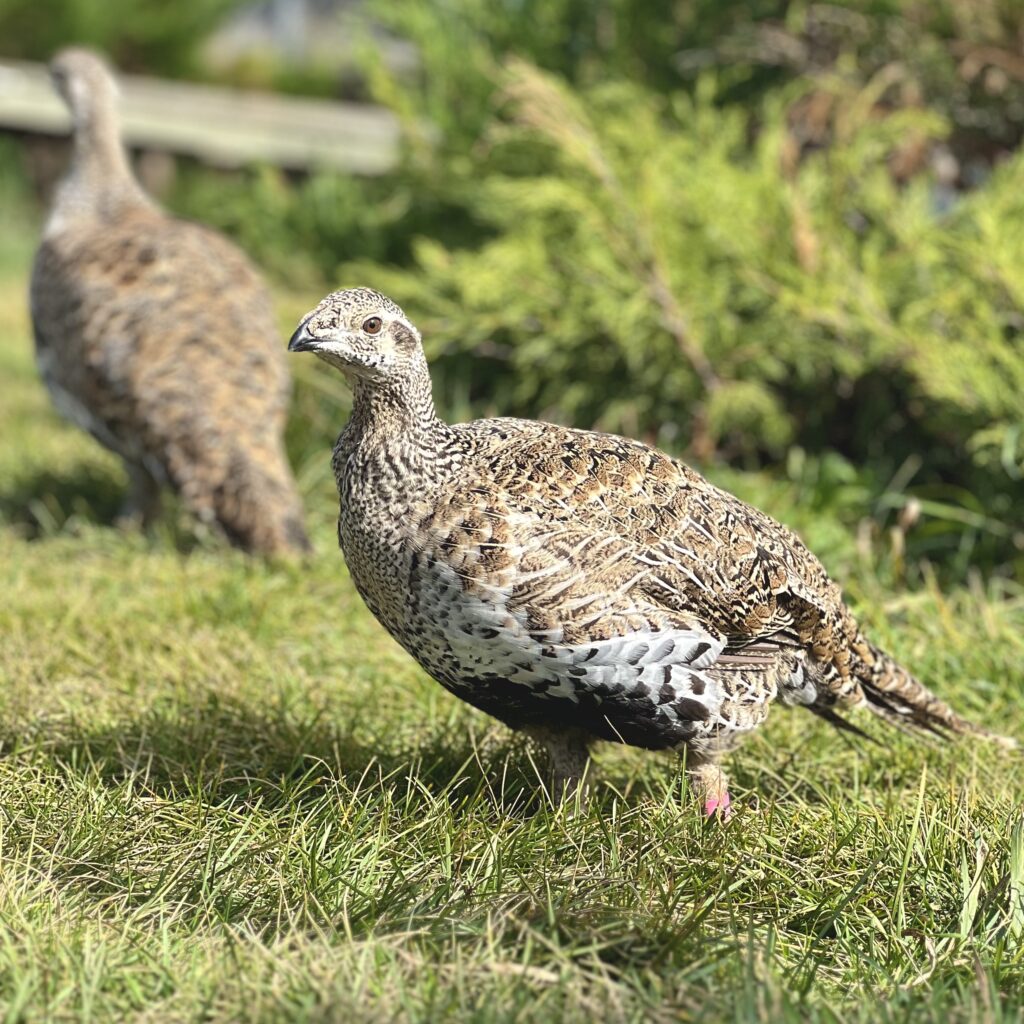
The greater sage-grouse is an iconic prairie species. Their survival reflects the health of Canada’s sagebrush grasslands as many species depend on this increasingly threatened ecosystem.
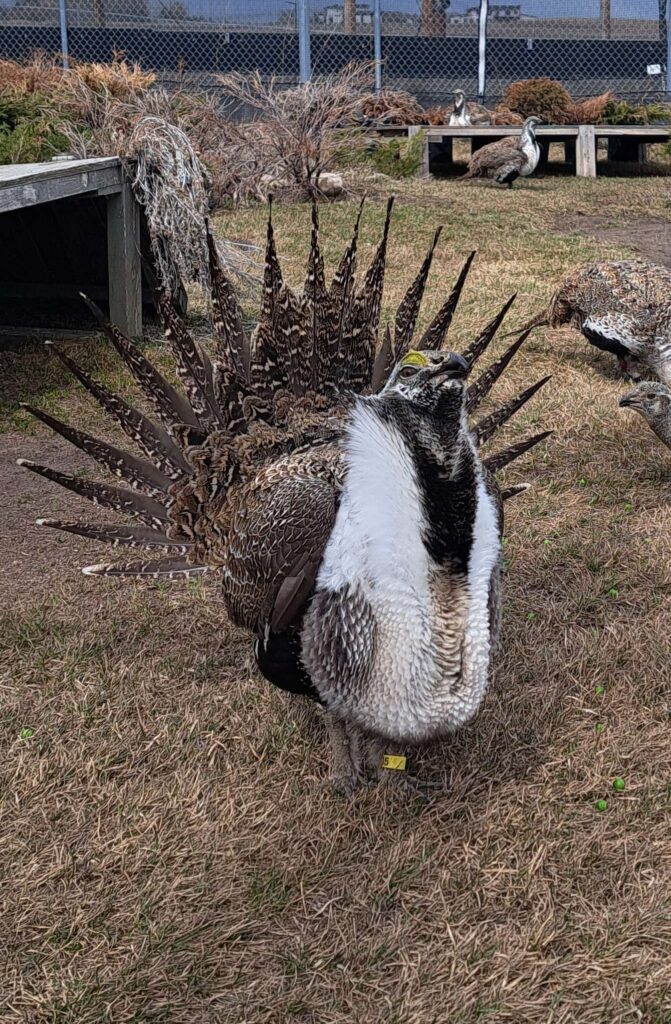
The greater sage-grouse is the largest grouse species in North America. It gets its name from sagebrush plants, which is its main source of food and shelter, and they’re an important indicator species for healthy sagebrush habitat.
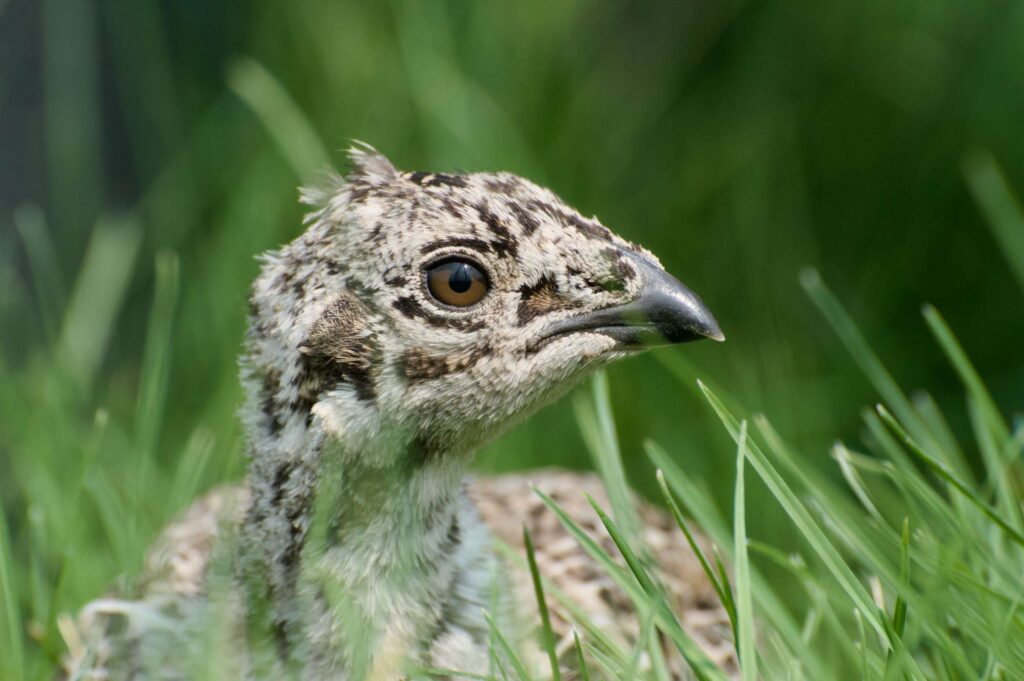
This species lives in sagebrush grasslands across parts of western North America. In Canada, they’re found in southeastern Alberta and southwestern Saskatchewan, where silver sagebrush provides food and shelter throughout the year.
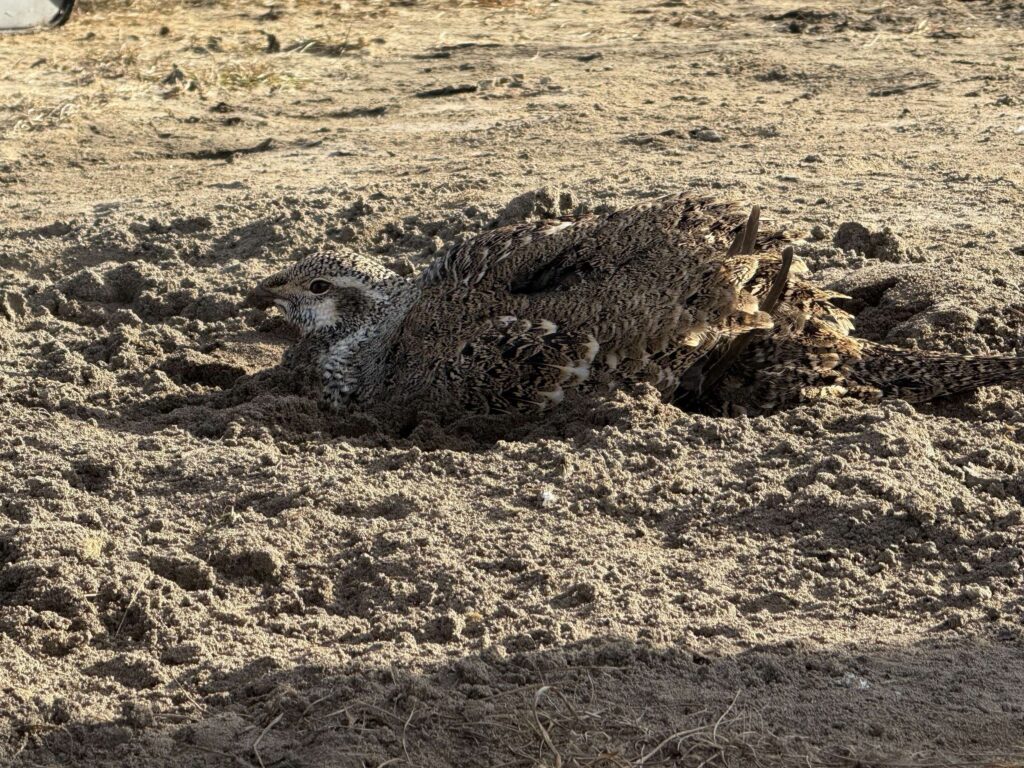
The greater sage-grouse are large grassland birds with brownish-grey feathers, white chests, dark bellies, and long pointed tail feathers. Males are larger than females and have black throats and yellow combs above their eyes. Females are smaller and camouflaged, helping them blend into sagebrush and hide from predators.
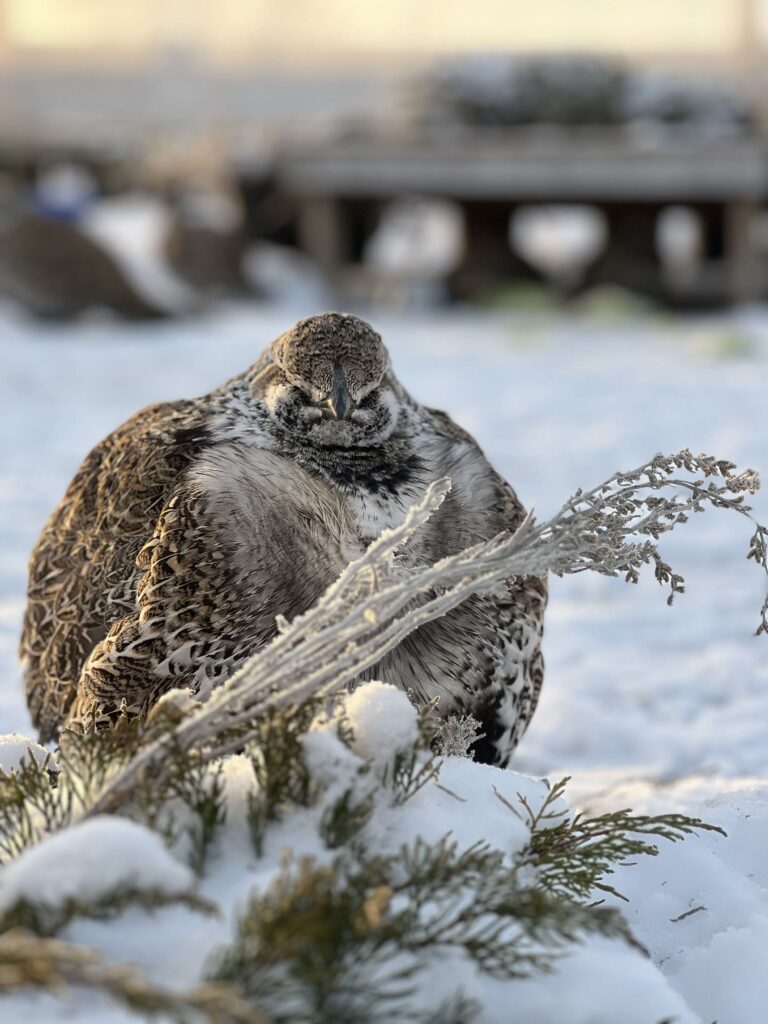
Greater sage-grouse are the largest grouse species in North America. This bird is known for the male’s elaborate courtship display, when males fan their tails and inflate large air sacs in their chest to attract females each spring.
The greater sage-grouse is considered an umbrella species for the whole of the sagebrush grasslands, one of Canada’s most threatened ecosystems. A thriving greater sage-grouse population would in effect restore balance and protect an additional 350 species of wildlife as well as the viability of the agricultural landscape.
Greater sage-grouse populations have declined due to habitat loss, fragmentation, and industrial development across the prairies. Increased human activities affect their breeding behaviour, with fewer birds visiting breeding grounds known as leks due to too much noise and light. This reduces the number of hens that successfully find mates and produce offspring. Climate change, extreme weather, and the conversion of native grasslands to croplands continues to threaten recovery efforts.
Between 2014 and 2024, the Wilder Institute, together with Environment and Climate Change Canada and Alberta Environment and Protected Areas (AEPA), led a conservation breeding and translocation program for greater sage-grouse. The conservation breeding program celebrated its first successful breeding in 2017 and began releasing juveniles into the wild in Alberta and Saskatchewan in 2018. In part, due to funding uncertainty, the Wilder Institute made the difficult decision to cease our role in the program at the end of 2024.
Due to the natural history of this lekking species, special considerations and resources are required to sustainably manage and breed this species under human care. The Wilder Institute was able to successfully produce and raise chicks and maintain a flock capable of contributing to wild sage-grouse population. The team has obtained valuable insight and knowledge into best management and veterinary care practices to support optimal welfare and breeding outcomes. The Wilder Institute will share learnings and recommendations with the wider sage-grouse conservation community to inform future greater sage-grouse conservation breeding programs, if deemed feasible.
Greater sage-grouse raised under human care and released to the wild were documented joining wild flocks, attending wild leks and attempting nests post release. Some hens survived > 2 breeding seasons and successfully raised a brood. However, post-release survival has been very low, with fewer than 1% of birds released during the program to date surviving to reach the following breeding season. Multiple factors likely contribute to this low survival rate.
The greater sage-grouse flock remains under the expert care of the Wilder Institute Animal Care, Health & Welfare team. Next steps in the future of the greater sage-grouse program in Canada and this flock will be determined collaboratively with government partners.
Supporting prairie species recovery through conservation breeding, habitat protection, and research.
The Wilder Institute developed Canada’s first conservation breeding and translocation program for greater sage-grouse. Over a decade, the program established a population of sage-grouse under human care and developed breeding, husbandry, veterinary care and facility design knowledge required to support this species under human care. These advances provide a foundation for any future conservation breeding initiatives. Find out more about these insights here: https://wilderinstitute.org/conservation/publications/
Between 2014 and 2024, the Wilder Institute, together with Environment and Climate Change Canada and Alberta Environment and Protected Areas (AEPA), led a conservation breeding and translocation program for greater sage-grouse. The conservation breeding program celebrated its first successful breeding in 2017 and began releasing juveniles into the wild in Alberta and Saskatchewan in 2018. The Wilder Institute made the difficult decision to cease our current role in conservation breeding and translocation activities at the end of 2024.
Due to the natural history of this lekking species, special considerations and resources are required to sustainably manage and breed this species under human care. The Wilder Institute was able to successfully produce and raise chicks and maintain a flock capable of contributing to wild sage-grouse population. The team has obtained valuable insight and knowledge into best management and veterinary care practices to support optimal welfare and breeding outcomes. The Wilder Institute will share learnings and recommendations with the wider sage-grouse conservation community to inform future greater sage-grouse conservation breeding programs, if deemed feasible.
Greater sage-grouse inhabit sagebrush grasslands across western North America’s prairie landscapes.
Help protect our prairie ecosystems and support endangered species recovery.
Support conservation breeding and recovery efforts across Canada’s remaining prairie landscapes.
Join a community working to restore healthy grasslands and protect wildlife across the prairies.
Explore monthly giving and fundraising opportunities that support prairie conservation and species recovery initiatives.