

The curiously isolated hairstreak exists nowhere else on Earth. With its entire range confined to roughly 300 hectares in Waterton Lakes National Park in southwestern Alberta, a single wildfire, invasive species outbreak, or climate event could erase the species entirely. Our program is working to prevent that.

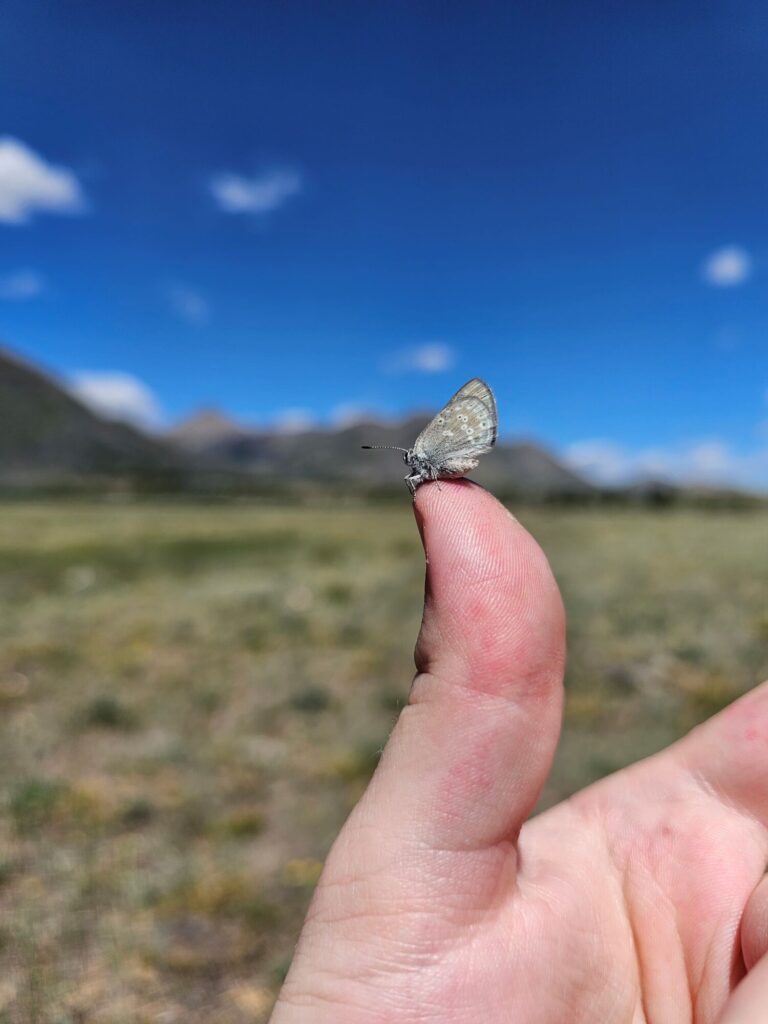
Since 2019, the Wilder Institute has partnered with Parks Canada to research, monitor, and develop a long-term conservation strategy for the curiously isolated hairstreak. Our work spans genomic research, ecological fieldwork, habitat restoration support, and feasibility studies for conservation breeding. There is still so much to uncover about this species, including building the evidence needed to understand how to protect it.
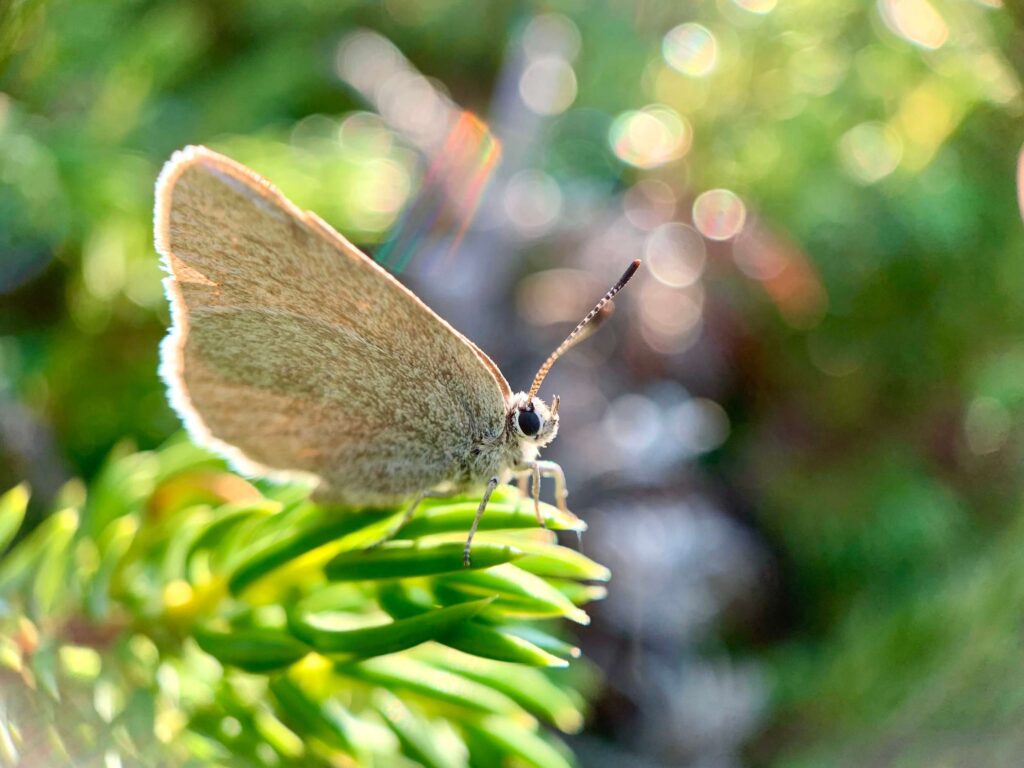
This program is centred on the Blakiston Fan within Waterton Lakes National Park – a UNESCO Biosphere Reserve, World Heritage Site, International Peace Park, and International Dark Sky Park. Field surveys, habitat assessments, and ecological research are conducted within this small area. Work to evaluate potential sites for a second population is also underway in and around the park.
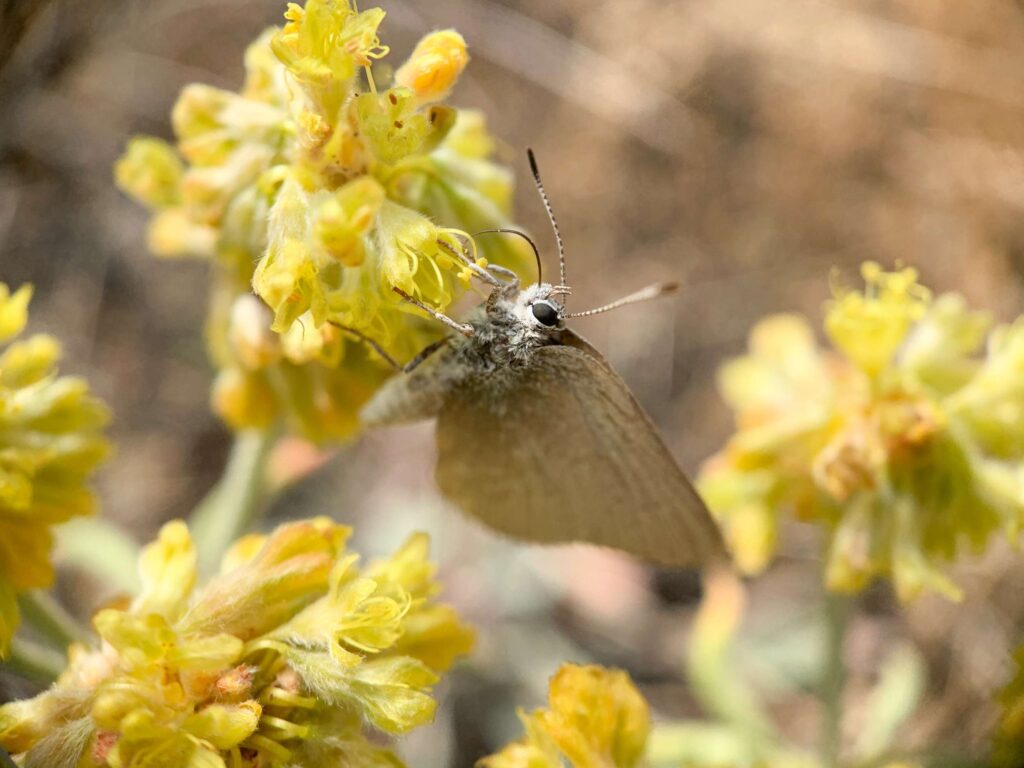
The curiously isolated hairstreak program aims to close critical knowledge gaps about this butterfly’s population, life cycle, and habitat needs – and use this knowledge to act. Long-term goals include establishing a second population to reduce extinction risk, developing a species-specific recovery plan, and ensuring the curiously isolated hairstreak has a future beyond its single, vulnerable grassland home.

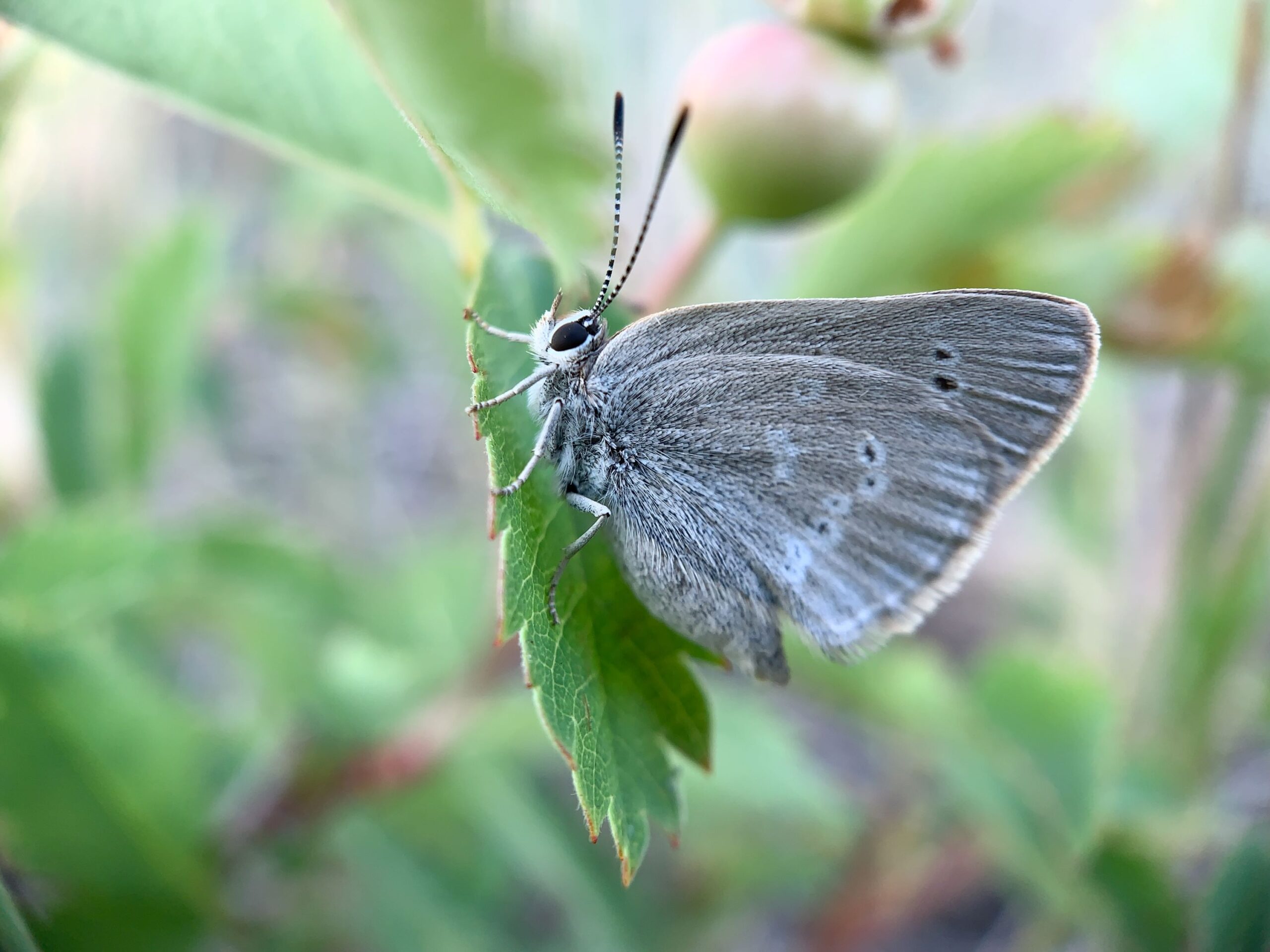
The curiously isolated hairstreak was only recently confirmed as a distinct species, and its entire global range is a single 300-hectare site in Alberta’s Waterton Lakes National Park. The 2017 Kenow wildfire burned more than half of its habitat, sharply reducing the butterfly’s population. Climate change, invasive plant species, and habitat disturbance continue to keep its threat level critical.
The curiously isolated hairstreak is found only in southwestern Alberta within Waterton Lakes National Park. Its entire global range covers approximately 300 hectares on the Blakiston Fan, making Canada solely responsible for protecting this unique species and its habitat.
This butterfly depends on the native grassland habitat within the Blakiston Fan of Waterton Lakes National Park. It relies on healthy populations of silvery lupine, native flowering plants, and ecological conditions that support its specialized relationship with local ant species.
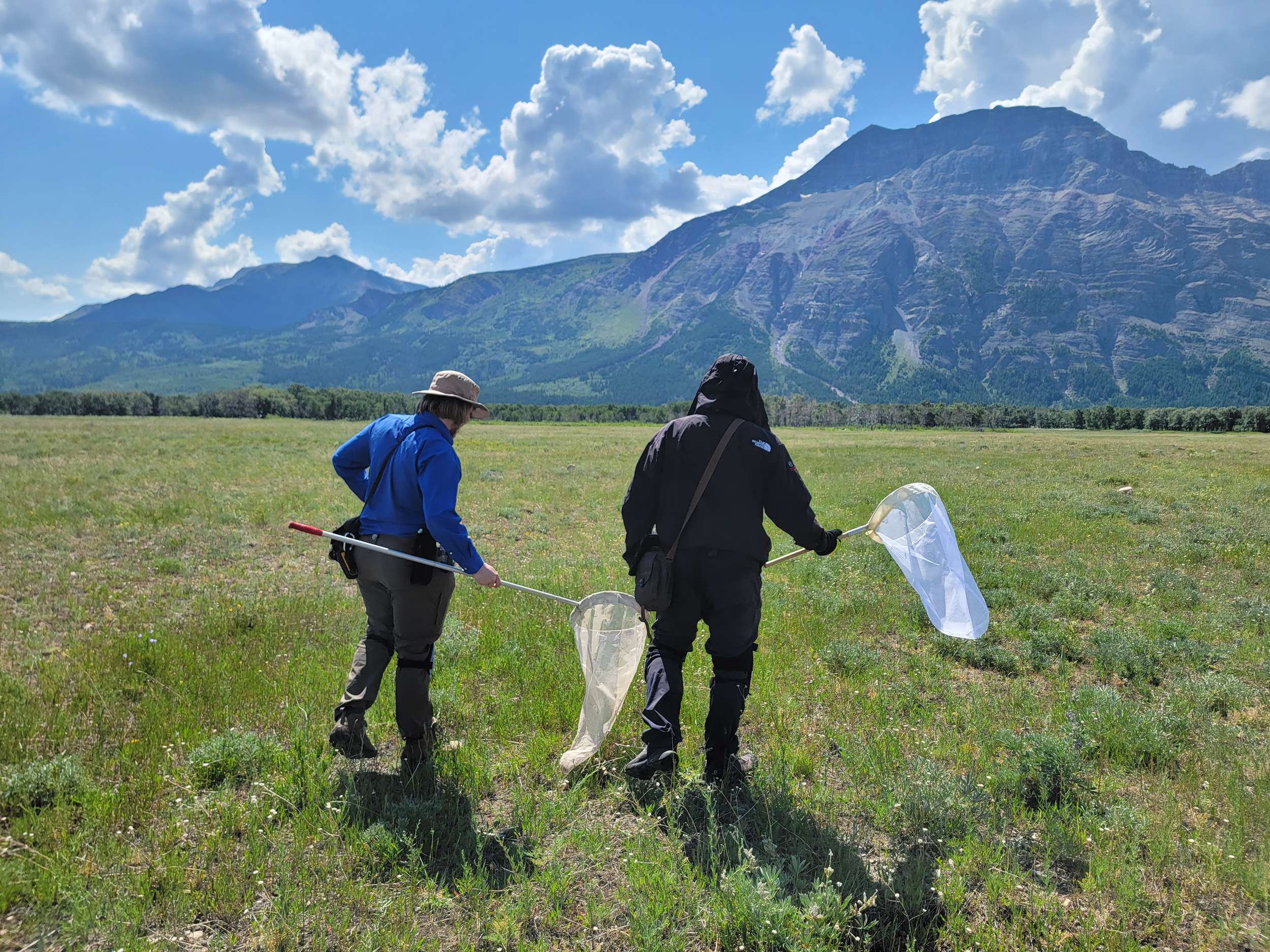
We combine genomic research, field ecology, and conservation planning to better understand this species. By tracking population trends, mapping habitat quality, and testing conditions for conservation breeding, we’re building a complete plan for the hairstreak’s long-term survival.
The curiously isolated hairstreak program is still in its early stages, but the groundwork being laid now will help determine the future long-term survival of the species. Key milestones already reached demonstrate how quickly collaborative conservation can change what’s possible for species on the edge of extinction.
✓
Successfully collected wild eggs to raise in human care
4
Four peer-reviewed papers based on the program, more on the way
>12
Over a dozen volunteer spotted knapweed pulls organized to help reduce invasive species pressure on habitat
Every stage of the curiously isolated hairstreak program is designed to uncover what this species needs to thrive. From field surveys to laboratory research to habitat planning, our work is methodical, collaborative, and built on the understanding that recovery requires knowing a species fully before acting at scale.
Our team has successfully encouraged egg laying under controlled conditions and is gathering data on larval development and host plants needed to assess full conservation breeding feasibility.
Release planning is in progress, and establishing a second population outside the Blakiston Fan is a key long-term goal, dependent on identifying suitable habitat and completing feasibility assessments.
Annual field surveys track adult abundance, larval presence, habitat condition, and interactions with host plants and ants. This provides the data needed to guide every conservation decision.
Working with Parks Canada, we’re actively evaluating sites within and near Waterton Lakes National Park that could support a second self-sustaining population, reducing the species’ single-site risk.
Protecting a species this rare requires the right partners. We collaborate with Parks Canada, university researchers, and global conservation networks to bring together land stewardship, scientific expertise, and conservation planning.
Learn more about how we’re building One Wild Future.
The curiously isolated hairstreak needs sustained, long-term conservation effort – here’s how you can help.
Your monetary support funds the research and fieldwork keeping this species from disappearing.
Partner with us and explore ways to protect this species that’s found nowhere else in the world.
Get updates from the field as this program works towards its next critical milestones.