

Standing nearly five feet tall with brilliant white plumage and a resonant, trumpeting call, the whooping crane is one of North America’s most iconic birds. Once pushed to the brink of extinction, this remarkable species has become a symbol of what’s possible when conservation leaders collaborate to help people and wildlife thrive together.
Listed as endangered under Canada’s Species at Risk Act, whooping cranes are one of North America’s rarest birds. While populations have increased from just 21 individual birds in the 1940s, recovery efforts are still needed to build self-sustaining populations in the wild.
Whooping cranes depend on wetlands throughout their lifecycle, including shallow breeding marshes, coastal wintering habitats, and stopover ponds critical to migration. These ecosystems provide them with nesting areas, food sources, shelter, and safety for raising their young.
The world’s only naturally occurring population breeds in the wetlands of Wood Buffalo National Park (WBNP) in Northern Canada. Each winter, they migrate from Northern Canada and across North America to winter along the Gulf Coast of Texas, making their return to nesting grounds in the spring, a journey of 8000km.
Habitat loss, poor reproductive success, climate change, and human disturbance.
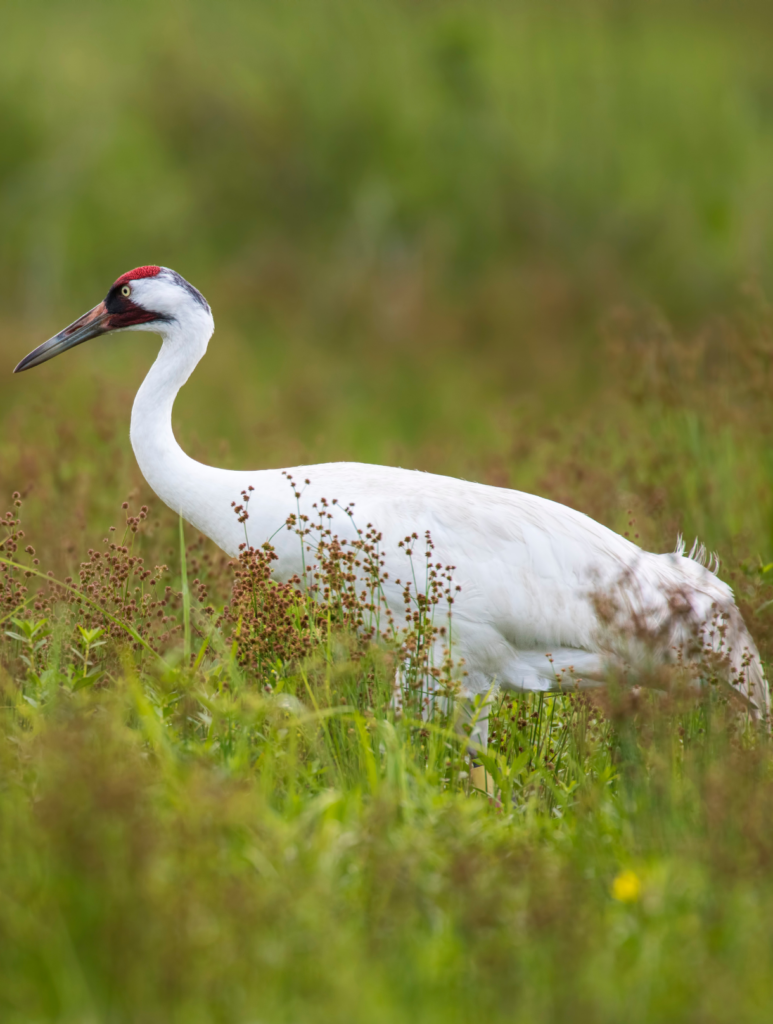
Whooping cranes are iconic wetland birds known for their height, striking white plumage, and loud calls that carry across their wetland habitats.
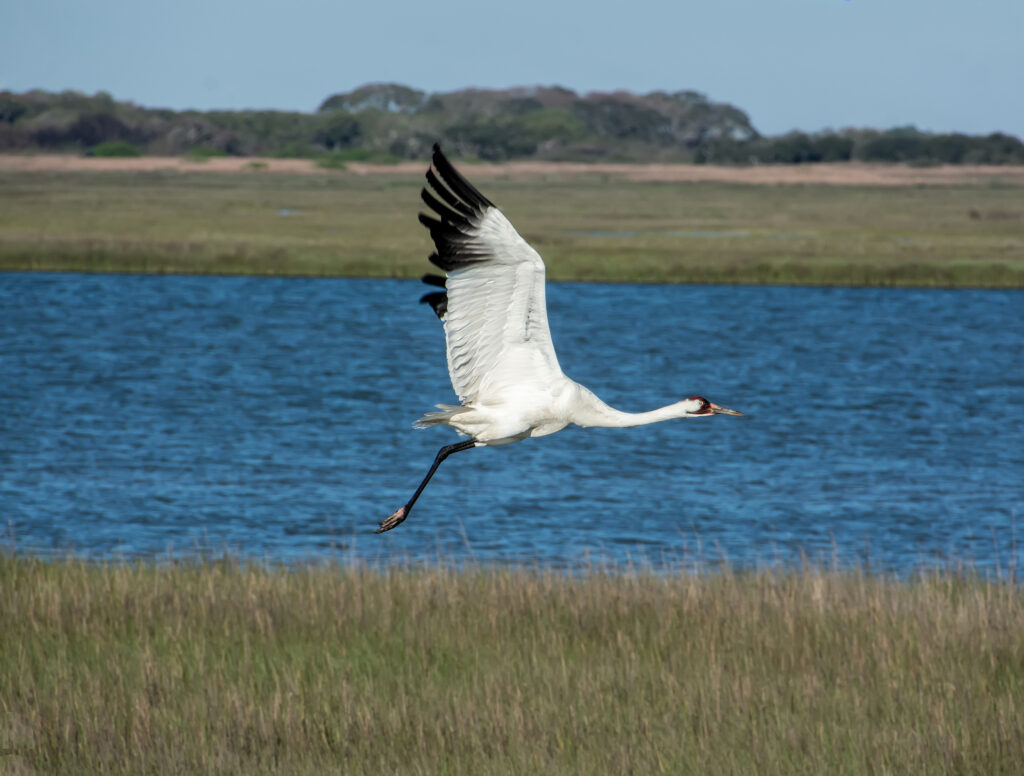
The whooping crane is one of only two crane species native to North America, and the only naturally occurring wild population breeds in and around Wood Buffalo National Park. Once reduced to just 21 birds in the 1940s, it has become one of North America’s most important conservation recovery stories.
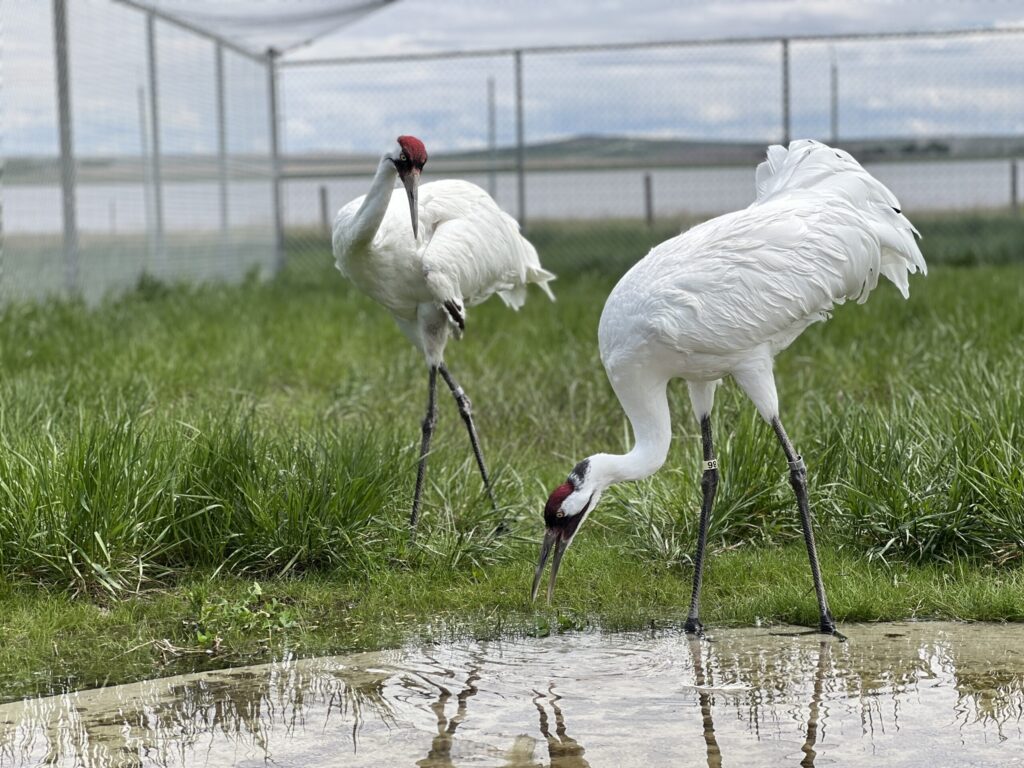
Wild whooping cranes breed in remote wetlands in and around Wood Buffalo National Park in the southern Northwest Territories Northern Alberta. During their migration journey, they rely on wetlands across central North America before reaching marshes along the Gulf Coast of Texas.
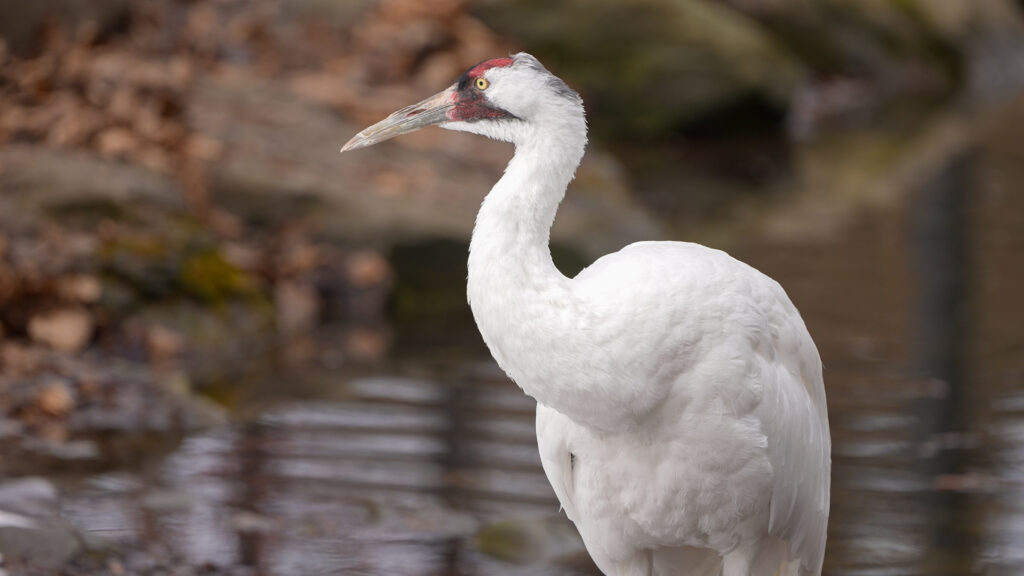
Whooping cranes are the tallest bird in North America, standing nearly five feet tall with long black legs. Adults have striking white plumage with black wing tips, a red crown, and a loud trumpeting call that can carry across the wetlands.
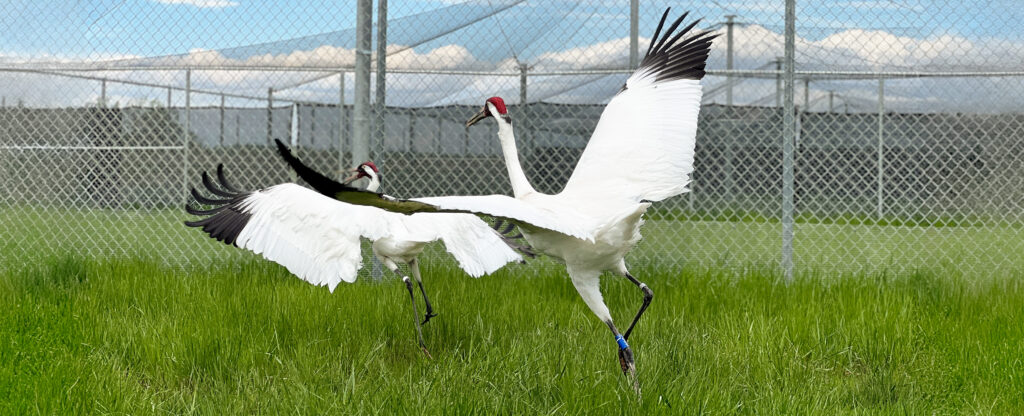
Every wild whooping crane alive today is a descendant of a tiny population of about 16 birds that survived near-extinction in the 1940s. Their expansive migration and recovery progress connects people from across North America, forging a unique bond between the species and the people who observe these formidable birds.
Whooping cranes are important indicators of healthy wetlands, an umbrella species supporting countless others. The same water systems that sustain whooping cranes are deeply connected to the cultural, spiritual, economic, and physical well-being of Indigenous and local communities in the South Slave region near Wood Buffalo National Park. Protecting whooping cranes and the wetlands they inhabit supports the provision of clean water, flood resilience, and ecotourism for communities across North America.
Whooping cranes face ongoing threats from habitat loss, wetland degradation, climate change, and human disturbance throughout their migratory range. Their small population size leaves the species vulnerable to disease, extreme weather, and other unpredictable events. Poor reproductive success, environmental contamination and oil spills in coastal areas, and collisions with human infrastructure have all contributed to low population growth.
The Wilder Institute leads Canada’s only conservation breeding program for whooping cranes. We also advance research to improve breeding success, hatch rates, and reintroduction outcomes.
Through conservation breeding, we help preserve genetically diverse crane populations. Chicks are parent-raised and transferred to partners for release into reintroduced populations across North America.
We collaborate with partners to improve translocation and release strategies that strengthen survival rates and support the development of self-sustaining wild crane populations.
Our work helps protect the wetlands that whooping cranes depend on while supporting biodiversity, cultural connections to the land, and inclusive conservation decision-making.
Our team is focused on our relationships with the First Nation and Métis communities who are traditional stewards and knowledge-holders of the land and wildlife in and around Wood Buffalo National Park. We collaborate with Indigenous communities, governments, and local partners to support inclusive conservation rooted in shared stewardship.
Discover the conservation programs helping species like the whooping crane recover.
Since 1992, the Wilder Institute has operated Canada’s only conservation breeding program, hatching and raising genetically diverse chicks for release into reintroduced wild populations and for participation in conservation breeding programs. We are working with First Nations and Métis communities to ensure recovery actions reflect the knowledge and values of the people who have long been stewards of the whooping crane and the lands they live on.
Conservation breeding takes place at the Wilder Institute’s Archibald Biodiversity Centre, where up to 20 cranes are housed in our breeding flock. Field research extends to Wood Buffalo National Park in the Northwest Territories and Northern Alberta, home to the world’s only naturally occurring wild population. Our cross-sector approach is strengthened through collaboration with partners across Canada and North America.
>56
More than 56 chicks hatched in our care, and over 100 live eggs transferred to partners for rearing
89
89 wild nests researched to understand habitat needs, environmental, and parental effects on nest success
>30
More than 30 years dedicated to the recovery of this species
The only remnant wild population of whooping cranes breed in the wetlands of the Northwest Territories and Northern Alberta and migrate across North America to winter on the Gulf Coast of Texas. There are also reintroduced populations of cranes – a migratory population that nest in Wisconsin, who migrate as far south as Florida to overwinter, and a non-migratory population who remain in Louisiana year-round.
Help protect endangered wildlife, wetlands, and the connections that sustain communities and ecosystems.
Your support helps preserve vital wetlands, protect whooping cranes, and advance conservation efforts that benefit wildlife and people alike.
Join a community helping safeguard biodiversity, cultural connections to the land, and healthier ecosystems for future generations.
From monthly giving to local partnerships, discover additional ways to support species recovery and long-term action for North America’s endangered wildlife.