Canada’s burrowing owl population is only 10% of what it was four decades ago. The Wilder Institute’s head-starting program intervenes at the most critical moment in a young owl’s life, giving them a winter survival advantage so they can return to their natural habitat.
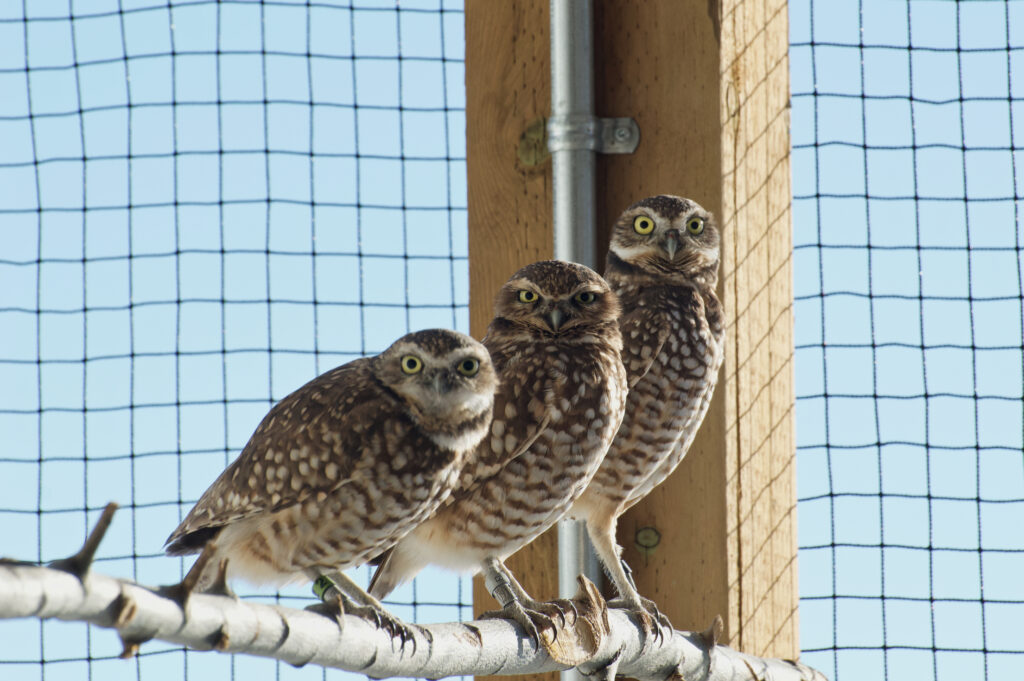
Head-starting is a conservation strategy that temporarily raises the most vulnerable owlets – those who hatched last, the smallest chicks, or those most likely to starve before fledging – through their first winter at the Wilder Institute’s Archibald Biodiversity Centre. Come spring, these owls are released as adults in breeding pairs, supported with supplemental food at their burrows and monitored throughout the nesting season.

The program operates across southeastern Alberta’s native prairie grasslands, a landscape recognized for its high concentrations of species at risk. Owls spend the winter and are cared for at the Wilder Institute’s Archibald Biodiversity Centre, a 330-acre conservation facility that opened in 2022. Releases take place exclusively on active cattle ranches, where sustainable grazing maintains the short-grass habitat burrowing owls require.
The program’s goal is to increase survival and return rates of young burrowing owls through their most challenging life stage, grow the number of breeding pairs returning to Alberta’s prairies, and contribute to national population recovery under Canada’s Species at Risk Act – not just releasing owls, but building the generations that follow them.
Burrowing owls have lost 90% of their Canadian population since 1990 and two-thirds of their historic range. The prairie grasslands they depend on have shrunk to less than 20% of their original extent, with only 1.25% being protected habitat. Road mortality, food scarcity, and habitat loss continue to put this species at risk in Canada.
For thousands of years, burrowing owls have been a part of grassland ecosystems in southern Alberta and Saskatchewan. They migrate each year to Mexico and the southern United States, although not all return in the spring to Canadian prairies.
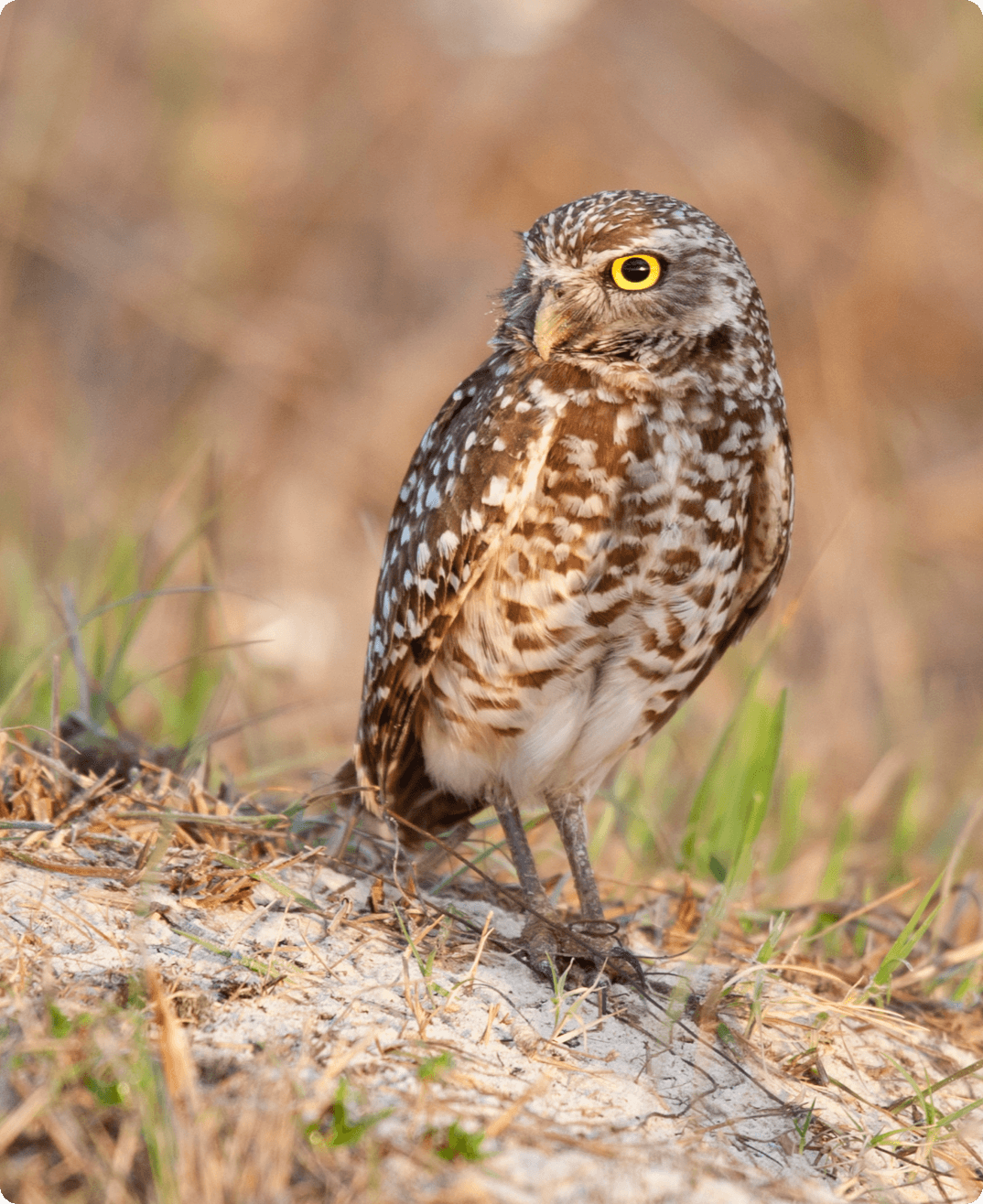
Burrowing owls live in open, dry grasslands with low vegetation. They rely on burrows created by mammals like badgers, ground squirrels, swift foxes, coyotes, and prairie dogs. They require grazed landscape to maintain the short grass they need for nesting and hunting.
We target the most vulnerable point in the burrowing owl’s life cycle by supporting the youngest and smallest chicks in each nest. By raising these owlets through their first winter at the Archibald Biodiversity Centre and releasing them as breeding pairs onto working ranches, we turn individual survival into population recovery.
Since 2016, our head-staring program has delivered measurable results. Each owl released becomes a breeding adult whose offspring carry the program’s impact forward into the wild population for years to come.
171
171 burrowing owls released since 2016
80%
80% of released pairs successfully nest in their first season
300+
300+ wild owlets produced by head-started birds
Head-starting is a precise, multi-stage process designed to keep owls wild while giving them the edge they need to survive. From nesting to release into its natural prairie habitat, every stage is guided by veterinary expertise, field experience, and a commitment to releasing birds that are ready to thrive.
We supplement food at active nests before the youngest owlets fledge, reducing starvation and competition. This increases the number of chicks available to enter the head-staring program each year.
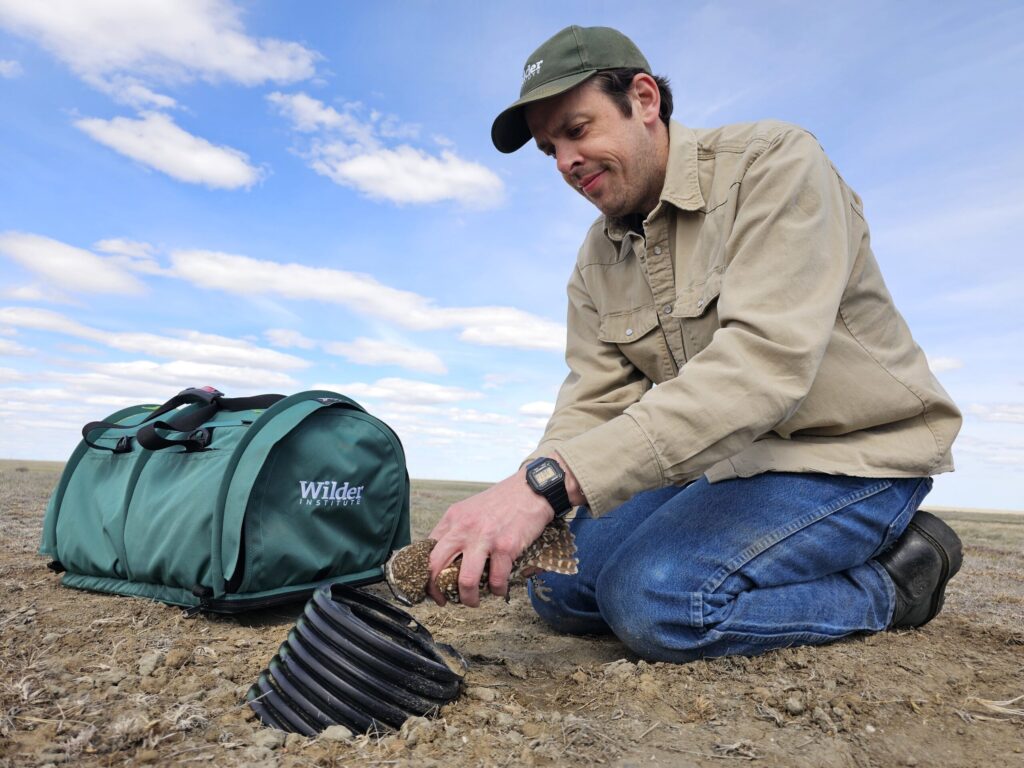
Owls are released in the spring as breeding pairs into artificial burrows on active cattle ranches in southeastern Alberta, timed precisely to coincide with their breeding season.
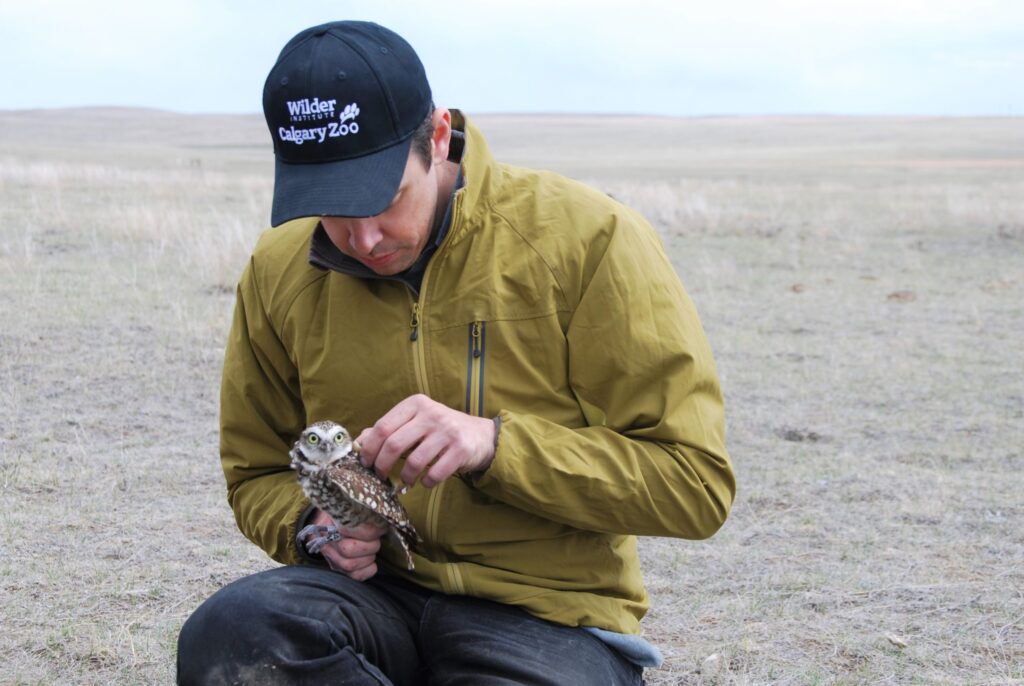
Satellite transmitters, worn as small “owl backpacks”, track released owls through their full migratory cycle to Mexico and back, building a clearer picture of migration and threats across their range.
Artificial burrows, built and installed in partnership with local ranchers, create nesting sites for both released and wild owls. This expands their habitat and supports natural population establishment beyond the program.
Burrowing owl recovery is not a single-organization effort. Our program’s reach and impact depend on sustained partnerships with government agencies, landowners, and conservation organizations united by a shared commitment to prairie species recovery.
Learn more about how we’re building One Wild Future.
Every owl released started with someone who cared.
Your gift funds head-starting, giving the youngest owls their best chance to survive.
Partner with us to protect the prairie species and landscapes that need us most.