

Barrens willow is one of three plant species found exclusively in Newfoundland’s coastal limestone barrens – a unique ecosystem where harsh, arctic-like conditions support rare plants that don’t grow anywhere else.
Barrens willow is listed as Endangered under both the federal Species at Risk Act and Newfoundland and Labrador’s Endangered Species Act. Its entire global range spans approximately 30 kilometers of coastline on the Great Northern Peninsula.
Barrens willow grows in exposed coastal limestone barrens where vegetation is sparse and conditions are extreme. Frost, winds, and shallow soils between rocks define the environment where this plant has adapted to survive.
This plant species is found only along the Strait of Belle Isle on the Great Northern Peninsula of Newfoundland. It’s one of the most range-restricted plant species in Canada.
Quarrying, offroad vehicle use, road construction, and climate change threaten the Barrens willow and its habitat.
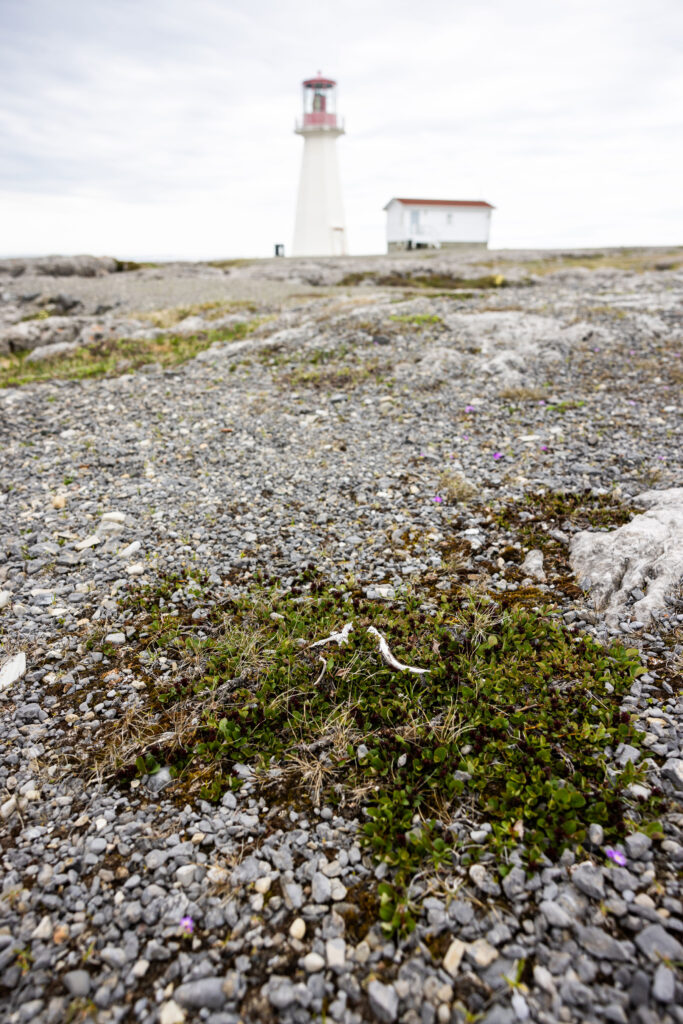
Small and resilient, Barrens willow is one of Newfoundland’s most remarkable endemic plants.

Barrens willow is a low-growing shrub. Like all willows, it’s an ecosystem pioneer, capable of colonizing disturbed limestone gravel and establishing in conditions where most plants cannot.
Barrens willow grows on exposed coastal limestone barrens where other vegetation is sparse and soils are shallow. It grows in dry to periodically wet conditions along the Strait of Belle Isle on the Great Northern Peninsula of Newfoundland.
This plant is related to other willow species found in northwestern North America, but instead of reaching upward, it hugs the ground. This, coupled with its small, rounded leaves and spreading form are adaptations to the windswept conditions of the limestone barrens.
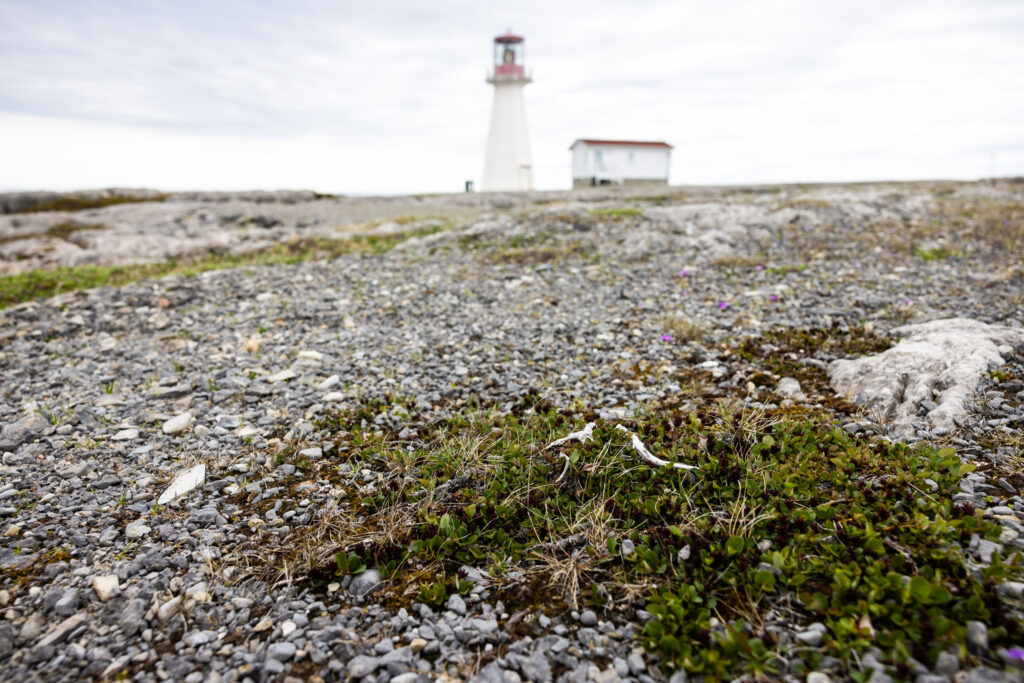
Barrens willow shares its habitat with two other plant species that are endemic to Newfoundland’s limestone barrens. It’s believed to be a relic of ancient arctic flora – a plant that grew at the end of the last ice age and never left.
This plant species is a keystone of the limestone barrens ecosystem. It stabilizes disturbed habitat, supports invertebrates, and helps other rare plants establish. Its presence is part of what makes the Great Northern Peninsula one of the most botanically significant landscapes in Canada, and protecting it means protecting this unique ecosystem.
Ongoing threats to this ecosystem include disturbances like construction, housing development, quarrying, oil and gas exploration, and motorized vehicles. Climate change alters the wind and frost processes that maintain the conditions that the Barrens willow depends on.
Through our Limestone Barrens Ecosystem Program, the Wilder Institute is supporting habitat restoration and translocation research across this unique landscape. We work with partners and local communities to help restore the limestone barrens ecosystem and protect its endemic plant species.
The Wilder Institute and our partners are studying which site conditions best support establishment and survival for the Barrens willow, generating an evidence base for long-term recovery.
We work with the Memorial University of Newfoundland, the Limestone Barrens Species at Risk Recovery Team, and other key collaborators to support the restoration of damaged limestone barrens habitat for the endangered plants that rely on this unique ecosystem.
Explore the Wilder Institute programs working towards rare plant recovery.
The Wilder Institute, in collaboration with Memorial University of Newfoundland, the Limestone Barrens Species at Risk Recovery Team and other key collaborators, supports habitat restoration at a damaged limestone barrens site and research to guide the successful reintroduction of this ecosystem’s endangered arctic-alpine plant species. In 2024 and 2025, our work focused on site preparation and landscape reshaping a former quarry site for native plant reintroduction. In 2026, we will be planting seeds of native species to re-establish the plant community at the newly restored site with our partners.
The program is focused on the Limestone Barrens of Newfoundland’s Great Northern Peninsula. The Limestone Landscapes Priority Place initiative has supported a collaborative network that has been foundational to our program and involvement in habitat and species recovery in Newfoundland.
The Barrens willow grows only on the coastline of Newfoundland’s Great Northern Peninsula.
Help us protect one of Canada’s rarest plants.
Your support funds habitat restoration and research for the limestone barrens ecosystem.
From monthly giving to corporate partnerships, explore other ways to support our conservation work.