

Fernald’s Braya is one three endangered plants found only in Newfoundland’s limestone barrens – an ecosystem that covers less than one percent of the island.
Fernald’s Braya is listed as Threatened federally and under Newfoundland and Labrador’s Endangered Species Act. Two of its historical sites, Savage Cove and Ice Point, are now considered extirpated.
Fernald’s Braya grows in the exposed, calcium-rich limestone barrens of Newfoundland’s Great Northern Peninsula. This is a tundra-like landscape of windswept gravel, shallow soils, and frost-shaped terrain where few other plants can survive. It thrives in open, rocky areas where competition from other plants is low.
Fernald’s Braya has 16 known populations spanning approximately 150 kilometres of coastline along Newfoundland’s Great Northern Peninsula. This area represents its entire global range.
Gravel quarrying, offroad vehicle use, invasive pests, road construction, and climate change threatens this species.
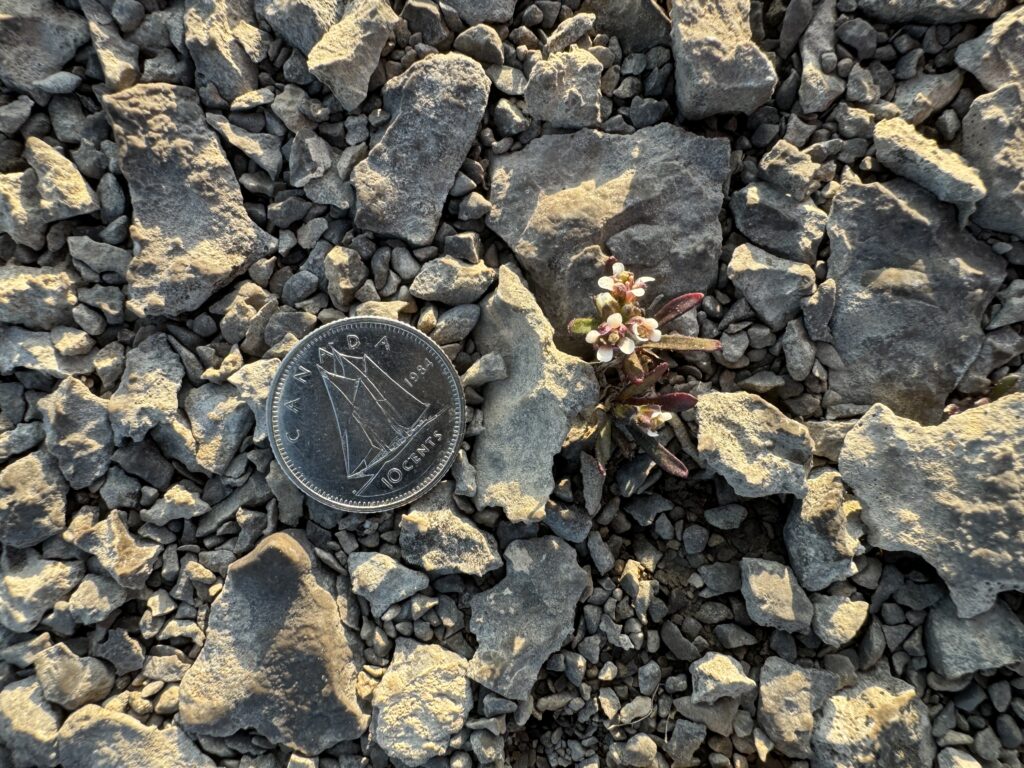
Fernald’s Braya is an arctic-alpine plant that is shaped by one of Canada’s harshest landscapes.
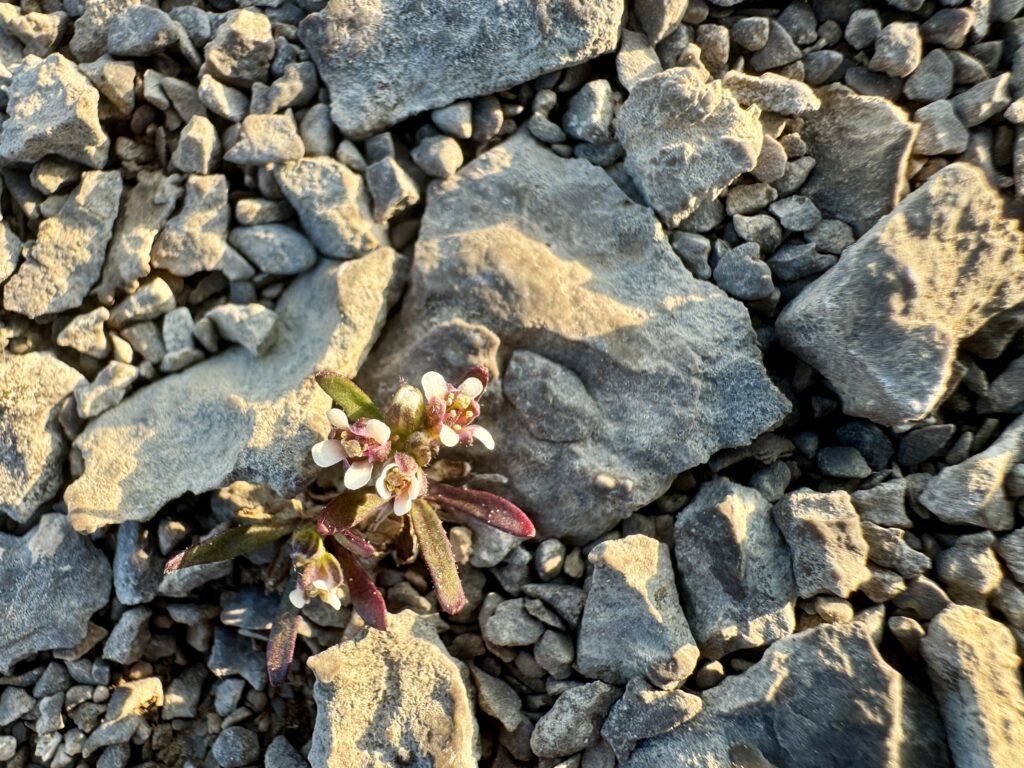
Fernald’s Brya is a small perennial plant in the mustard family. It produces clusters of white to pinkish-purple flowers and spoon-shaped leaves. It can be distinguished from the related Long’s Braya by its hairy seed pods.
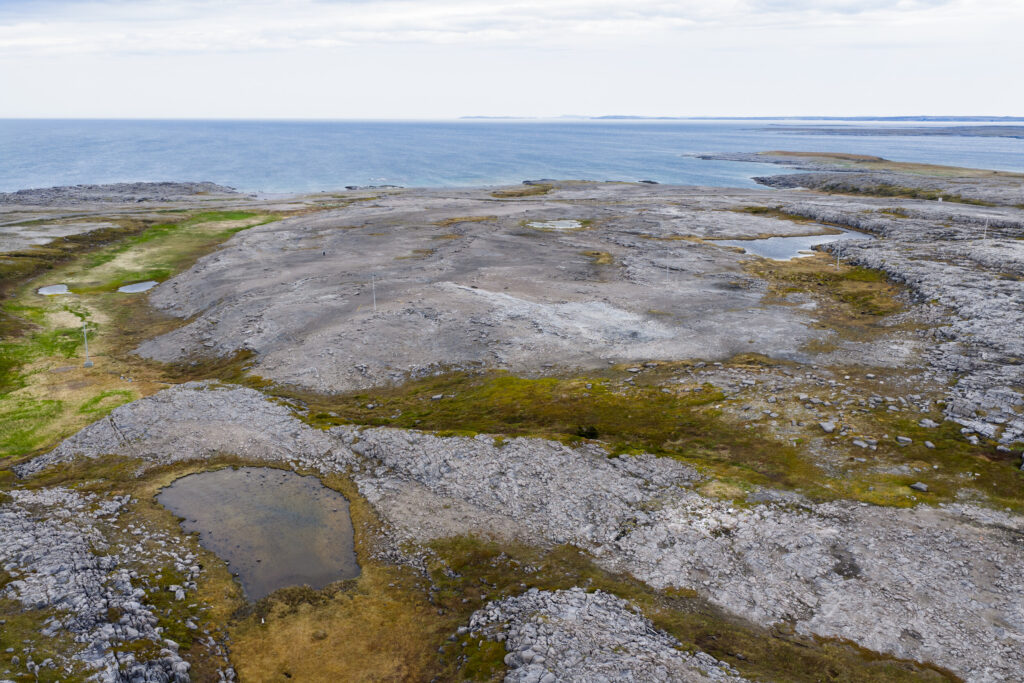
Fernald’s Braya is found in the limestone barrens of Newfoundland’s Strait of Belle Isle region. It grows in exposed sites where frost action, scouring winds, and shallow solids prevent most other plants from growing. These harsh conditions are exactly what Fernald’s Braya needs to survive.
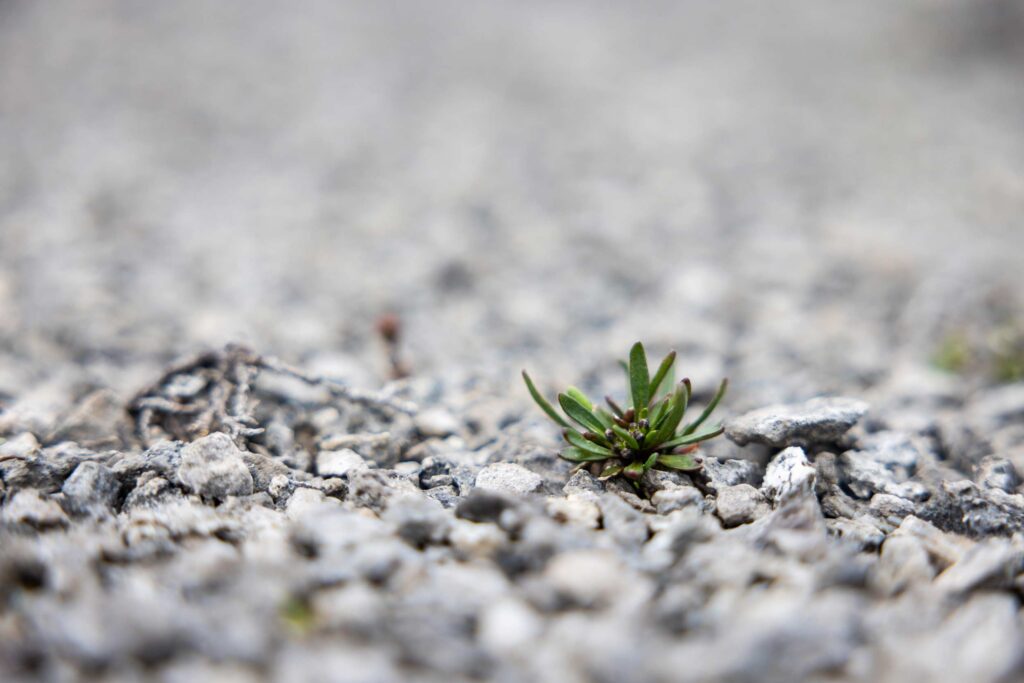
Fernald’s Braya is a small perennial that grows from deep taproots that anchor it in loose limestone gravels. It has spoon-shaped leaves that cluster at the base of the plant with pinkish-purple white flowers. It dies back to the crown each winter and reemerges from the same root each spring.
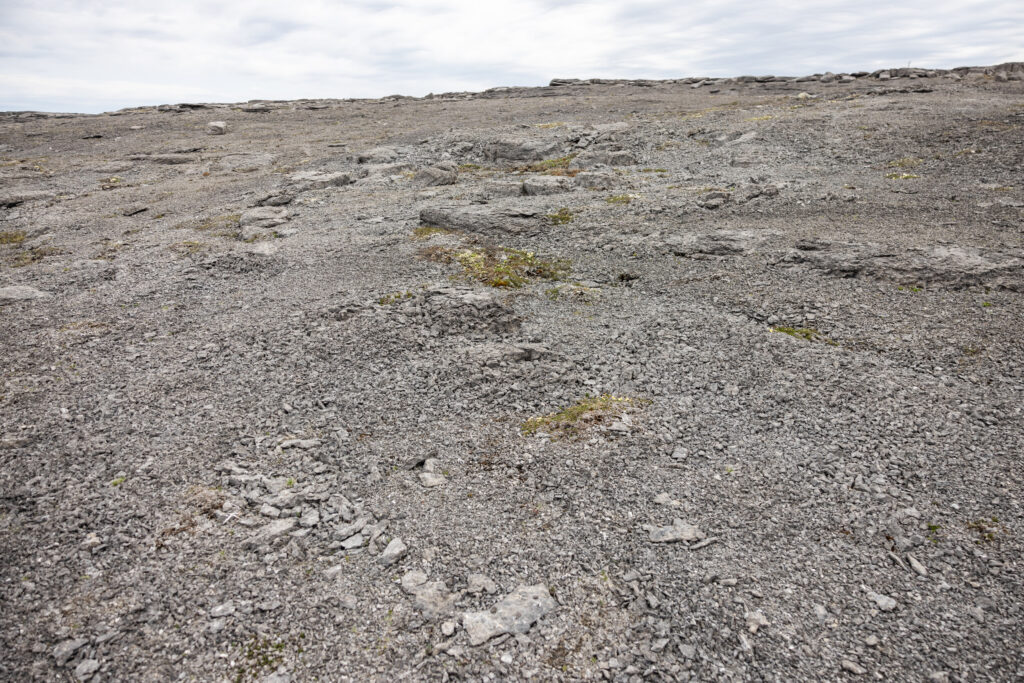
Fernald’s Braya has a unique ecological niche that’s shaped by the cold, calcium-rich soils of the limestone barrens. Plant populations on disturbed habitat have higher reproduction rates than those on undisturbed ground – but also have a higher mortality rate.
Fernald’s Braya is an indicator of the health of one of Canada’s rarest ecosystems. The limestone barrens it inhabits support a unique population of arctic-alpine plants found nowhere else on Earth, making Fernald’s Braya one of the most irreplaceable native plant species.
Quarrying and road construction have destroyed significant portions of Fernald’s Braya’s habitat, while climate change is altering the frost and wind patterns that define the limestone barrens. Ongoing infrastructure maintenance continues to damage remaining populations, and off-road vehicles are considered one of the most damaging human activities.
Through the Limestone Barrens Ecosystem Program, the Wilder Institute is supporting habitat restoration and translocation research across the only landscape this plant calls home. We work with partners and local communities to help restore the unique limestone barrens ecosystem.
Site preparation and landscape reshaping at a degraded limestone barrens site are rebuilding the conditions this plant needs, creating space for new populations to establish beyond their current range.
We work with the Memorial University of Newfoundland, the Limestone Barrens Species at Risk Recovery Team, and other key collaborators to support the restoration of damaged limestone barrens habitat for the endangered plants that rely on this unique ecosystem.
Discover the programs helping recover rare plant species like Fernald’s Braya.
The Wilder Institute, in collaboration with Memorial University of Newfoundland, the Limestone Barrens Species at Risk Recovery Team and other key collaborators, supports habitat restoration at a damaged limestone barrens site and research to guide the successful reintroduction of this ecosystem’s endangered arctic-alpine plant species. In 2024 and 2025, our work focused on site preparation and landscape reshaping a former quarry site for native plant reintroduction. In 2026, we will be planting seeds of native species to re-establish the plant community at the newly restored site with our partners.
The program is focused on the Limestone Barrens of Newfoundland’s Great Northern Peninsula. The Limestone Landscapes Priority Place initiative has supported a collaborative network that has been foundational to our program and involvement in habitat and species recovery in Newfoundland.
Help us protect this Canadian plant species.
Fund the habitat restoration and translocation research that are giving this plant species a future.
Help the Wilder Institute protect Canada’s rare plant species by partnering with us.
Explore monthly giving, volunteer opportunities, and other ways to support conservation work.