

The mountain bongo is one of Africa’s rarest antelope species, found only in Kenya’s high altitude montane forests. Protecting this elusive species helps conserve important forest biodiversity and freshwater resources that support both wildlife and local communities.
The mountain bongo is listed as Critically Endangered, with fewer than 60 individuals estimated remaining in the wild. Ongoing threats from habitat loss, poaching, disease, and their small, fragmented populations continue to place the species at risk of extinction.
Mountain bongos live in dense montane forests at high elevations in Kenya. These forests provide food, shelter, and movement corridors for the bongo and other species, while also serving as essential water catchment areas known as Kenya’s water towers, supplying water for 90% of Nairobi’s citizens.
Wild mountain bongos remain only in a few isolated forest ecosystems in Kenya. These fragmented habitats limit movement between populations, reducing reproduction opportunities and long-term resilience.
Habitat fragmentation, poaching, and human pressure on forests threaten survival.
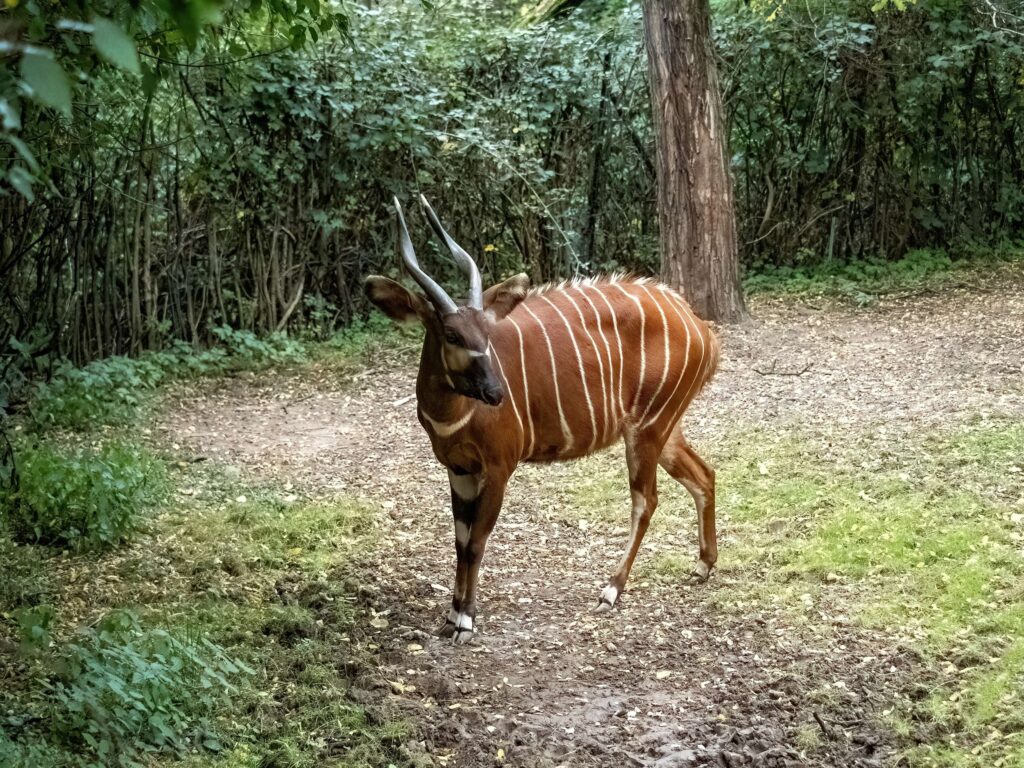
The mountain bongo is a shy and elusive forest antelope whose future depends on healthy forests, connected habitats, and collaborative conservation efforts rooted in local stewardship.
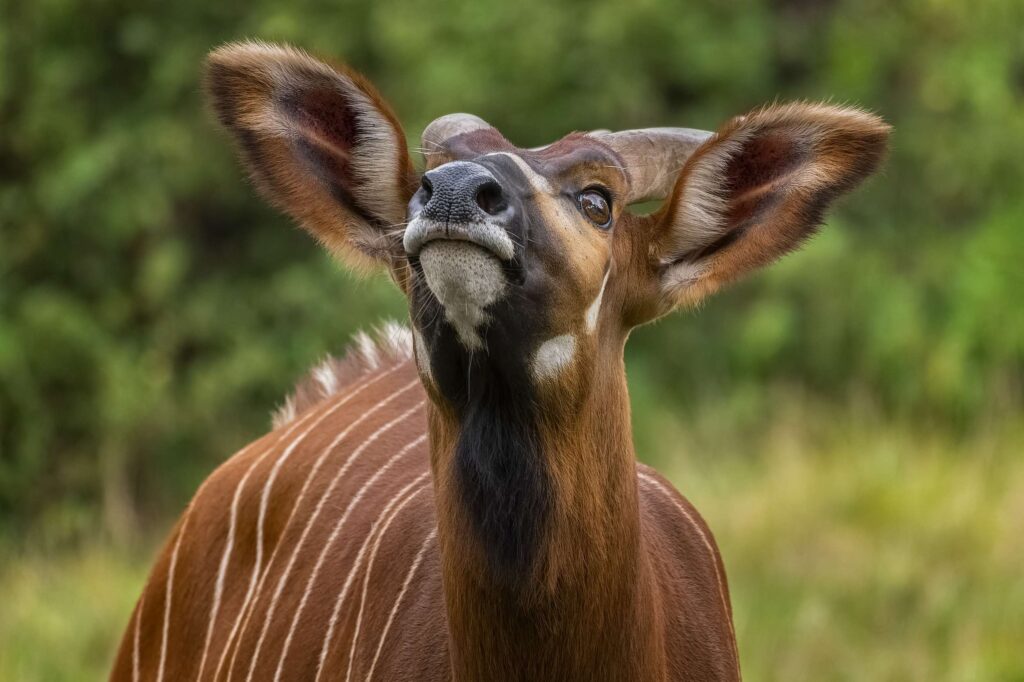
The mountain bongo is the world’s largest forest-dwelling antelope and one of two bongo subspecies found in Africa. Endemic to Kenya, it was formally recognized as a distinct subspecies in 2008 and is now considered one of world’s rarest antelope.
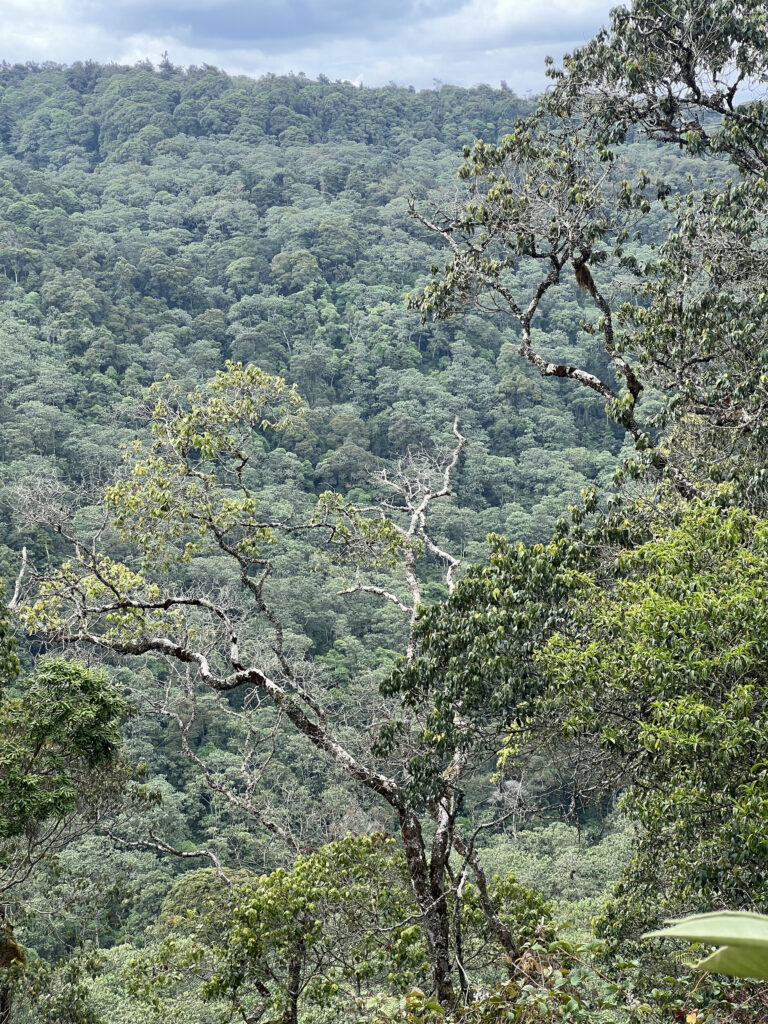
This species inhabits high-altitude forests between roughly 2,000 and 3,000 metres above sea level in Kenya’s montane ecosystems. They rely on dense forest cover with abundant vegetation and often move seasonally between bamboo zones, cloud forests, and forest clearings.
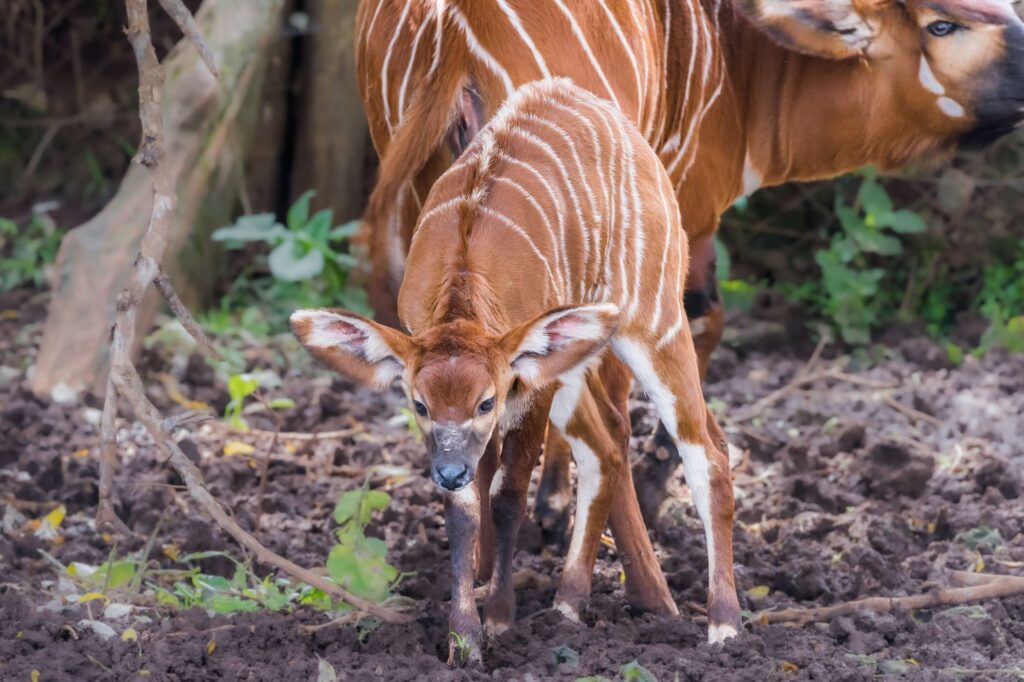
Mountain bongos have rich chestnut-brown coats marked with striking white or yellow vertical stripes that help camouflage them in shifting forest light. Both males and females grow long spiral-shaped horns, and their large ears provide exceptional hearing in dense forest habitats.
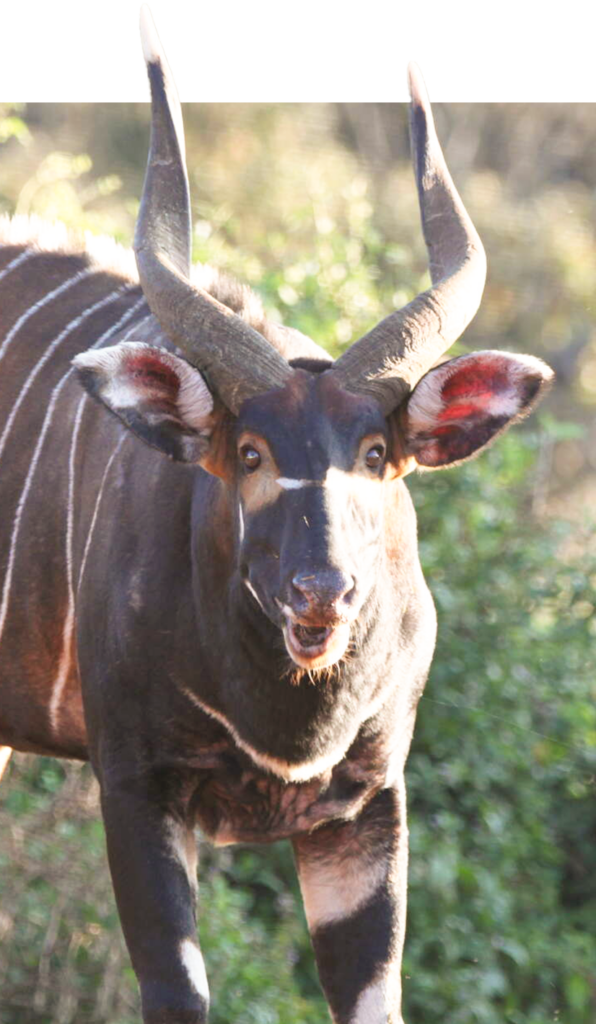
The mountain bongo is found nowhere else in the world. They contribute to ecosystem health while serving as an important indicator of biodiversity of montane forests that can contribute to the health of freshwater systems in Kenya.
Protecting mountain bongos means protecting Kenya’s montane forests – ecosystems that store water, support biodiversity, and sustain local livelihoods. Conserving these forests benefits countless other species while helping safeguard critical freshwater resources relied on by communities across the region.
Mountain bongos face increasing pressure from habitat loss, forest degradation, hunting, disease, and expanding human activity. Fragmented forests make it more difficult for bongos to safely move and breed to naturally grow their herds, making their small, isolated populations especially vulnerable to local extinction.
The Wilder Institute works with conservation partners and local communities to protect mountain bongos and strengthen habitat stewardship in Kenya. Through camera monitoring, forest patrols, and community conservation initiatives like sustainable honey cooperatives, we’re helping support both wildlife recovery and local livelihoods.
Remote cameras and forest patrols help researchers better understand mountain bongo populations, habitat use, and ongoing threats, informing conservation planning and future recovery efforts.
Working with conservation partners and local communities, we’re helping prepare for potential future translocations of captive-bred mountain bongos to strengthen remaining wild populations.
Our work supports inclusive governance and local stewardship to ease human pressure on forest resources and mountain bongo while providing sustainable revenue for local people.
In each of the locations where we work to protect the mountain bongo, we strive to conserve the species and their habitat while also providing opportunities for income generation and improving livelihoods by facilitating a locally managed honey cooperative.
We work with local communities and conservation partners to protect other species like mountain bongos.
The Kenya Mountain Bongo Partnership is a multi-pronged, evidence-based conservation program combining biomonitoring, field research, forest protection, and reintroduction planning. Working with Rhino Ark Charitable Trust, we operate across the Eburu Forest Reserve and the Ragati-Chehe forests of Mt. Kenya, braiding Western science with traditional and local ecological knowledge to create conservation strategies.
This program operates across two forest sites: the Eburu Forest Reserve and the Ragati-Chehe forests within Mt. Kenya National Park and Reserve – a UNESCO World Heritage Site. Both sites are within Kenya’s mountain forest belt, the country’s primary water catchment area, home to dozens of other species like leopards and elephants.
Mountain bongos are found only in the fragmented montane forests of central Kenya.
Help protect forests, biodiversity, and endangered species in Kenya and beyond.
Support conservation programs that protect mountain bongos, strengthen community stewardship, and conserve critical forest habitats in Kenya.
Join a global community advancing conservation through collaboration, research, and locally led action.
Explore monthly giving, fundraising, and partnership opportunities that help protect wildlife and ecosystems for future generations.